
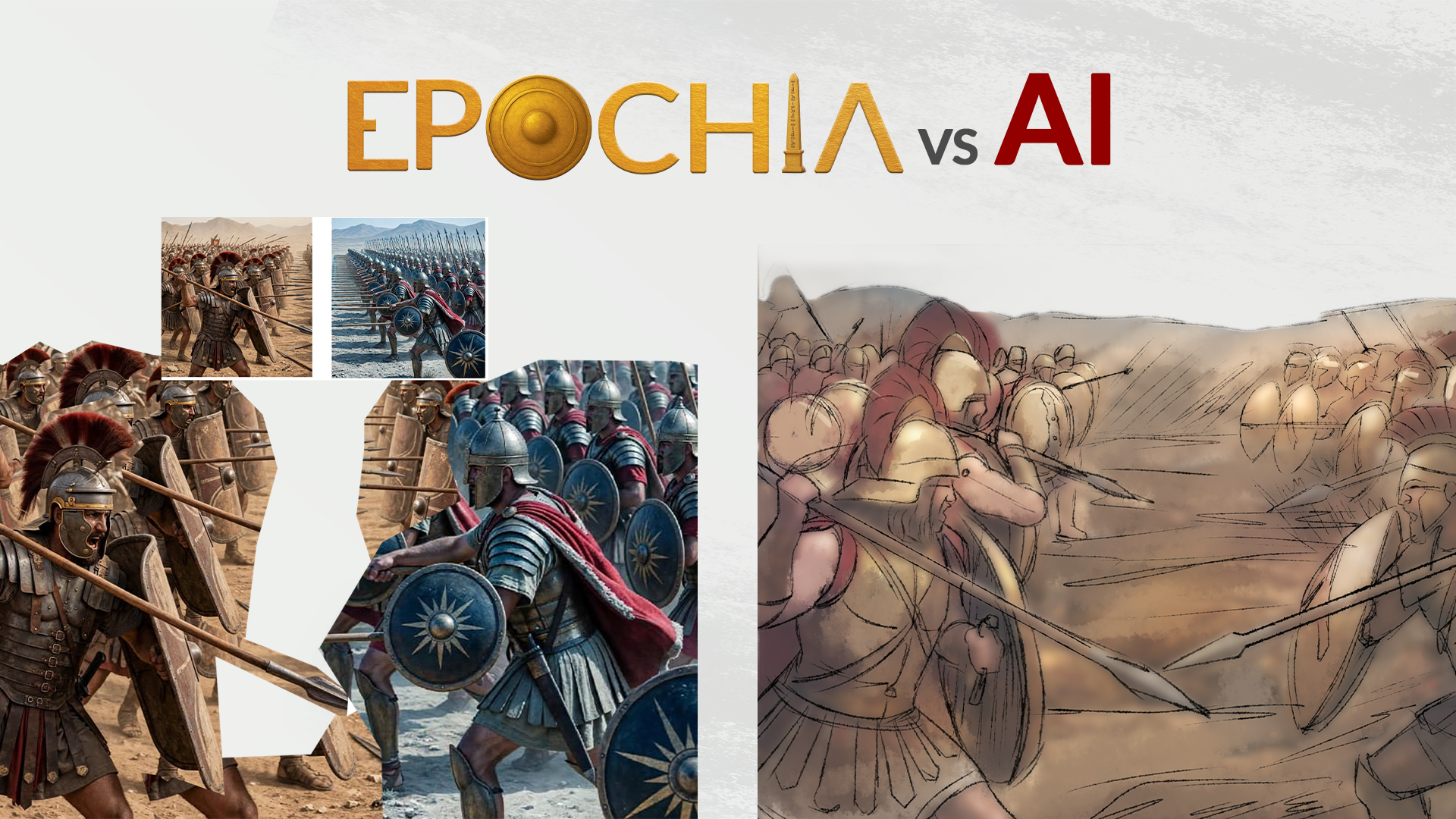
Where AI fits into Epochia's art
AI involvement in Epochia's art.
A few of you have asked whether the art is AI, or told me flatly that it is. It's a fair question and it deserves a real answer, so I've taken one illustration and broken it into the four phases it went through.
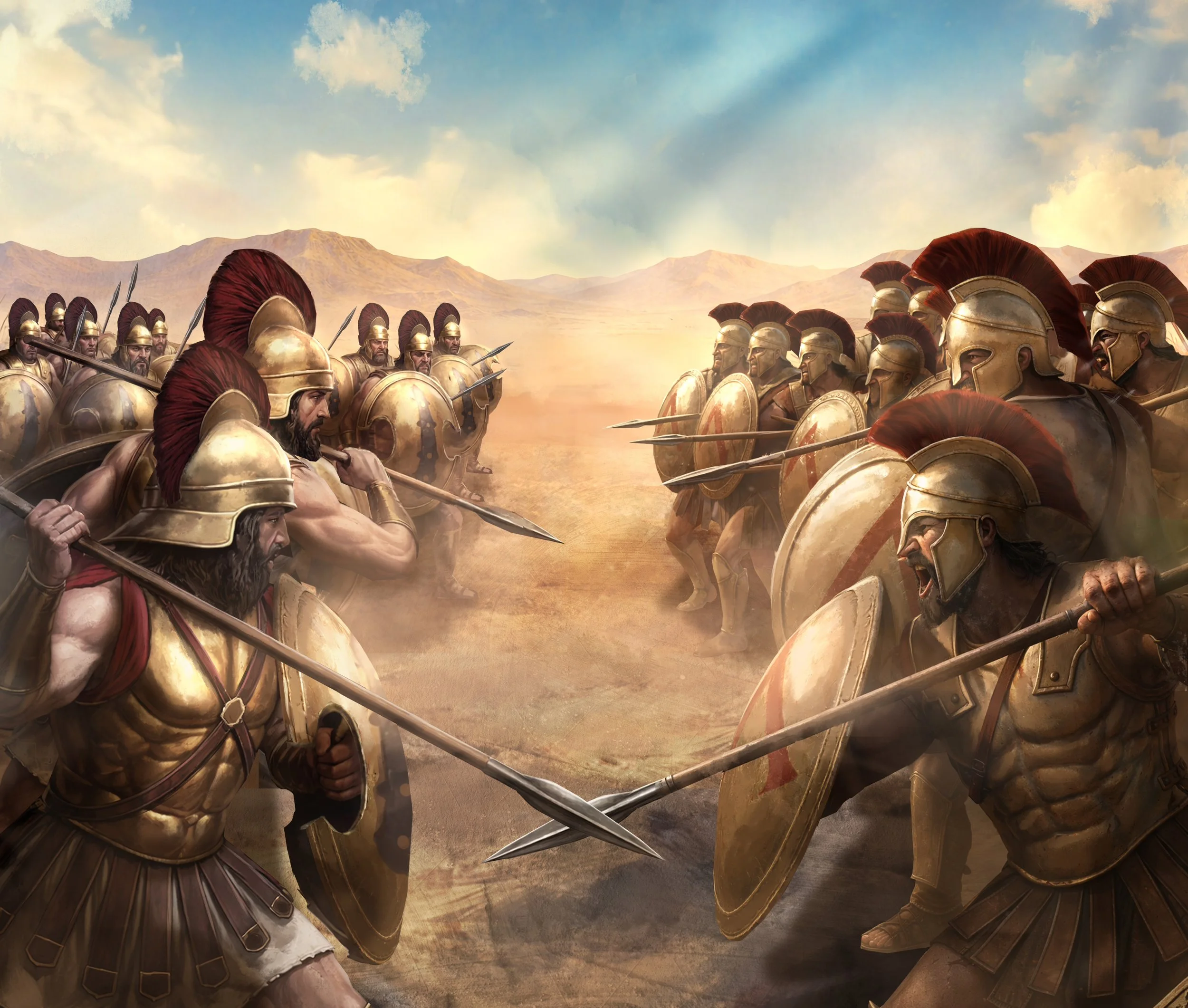
A note on timing first. This sample was made in the first half of 2026, while most of Epochia's art was produced through 2025. I mention it because AI models improve fast — month to month — so a process from a year ago doesn't look like a process from today. The date is part of the answer.
The illustrations are Whiteghoul Studio's work. What I provide is information: references, the historical details I want visible, the mood I'm after.
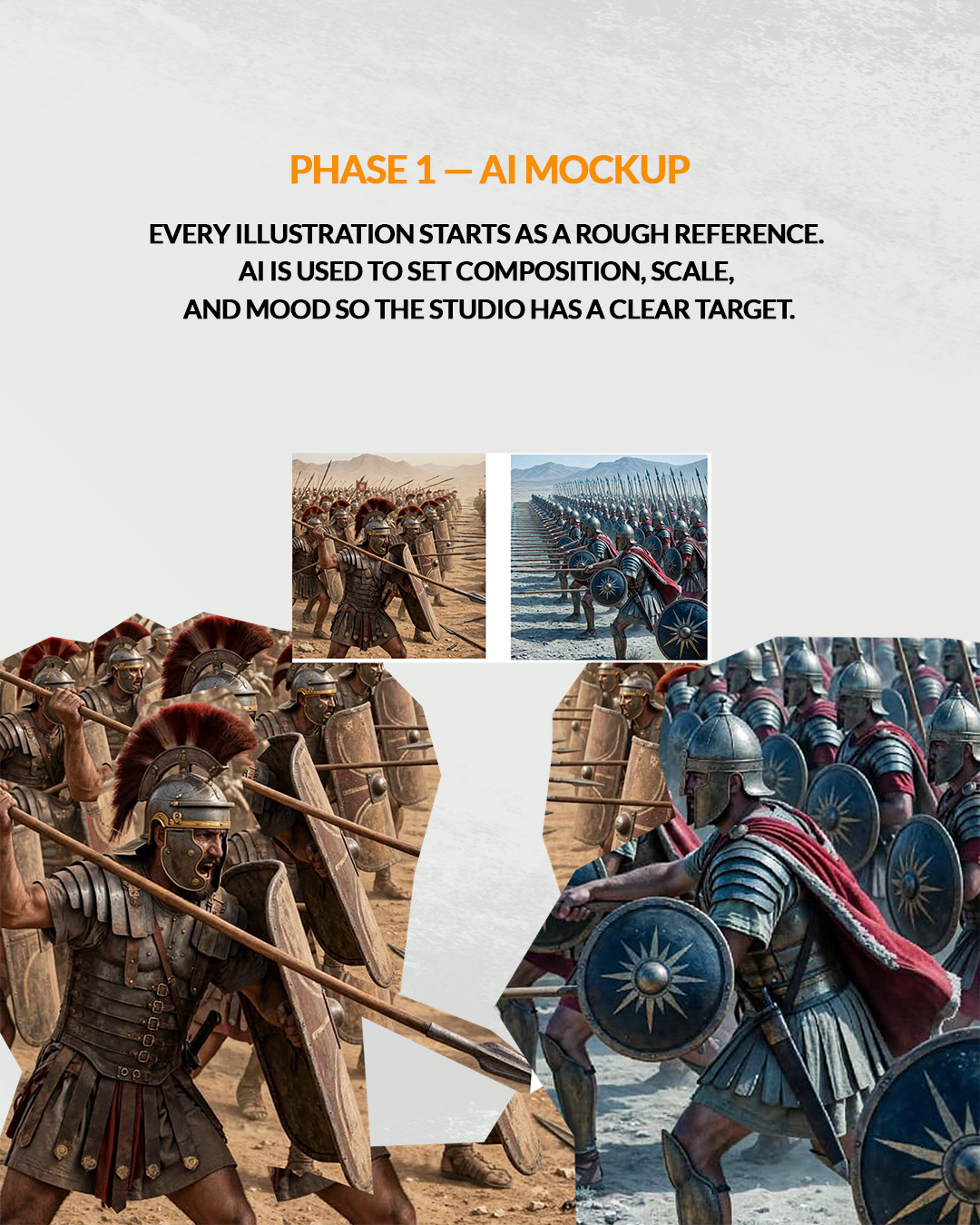
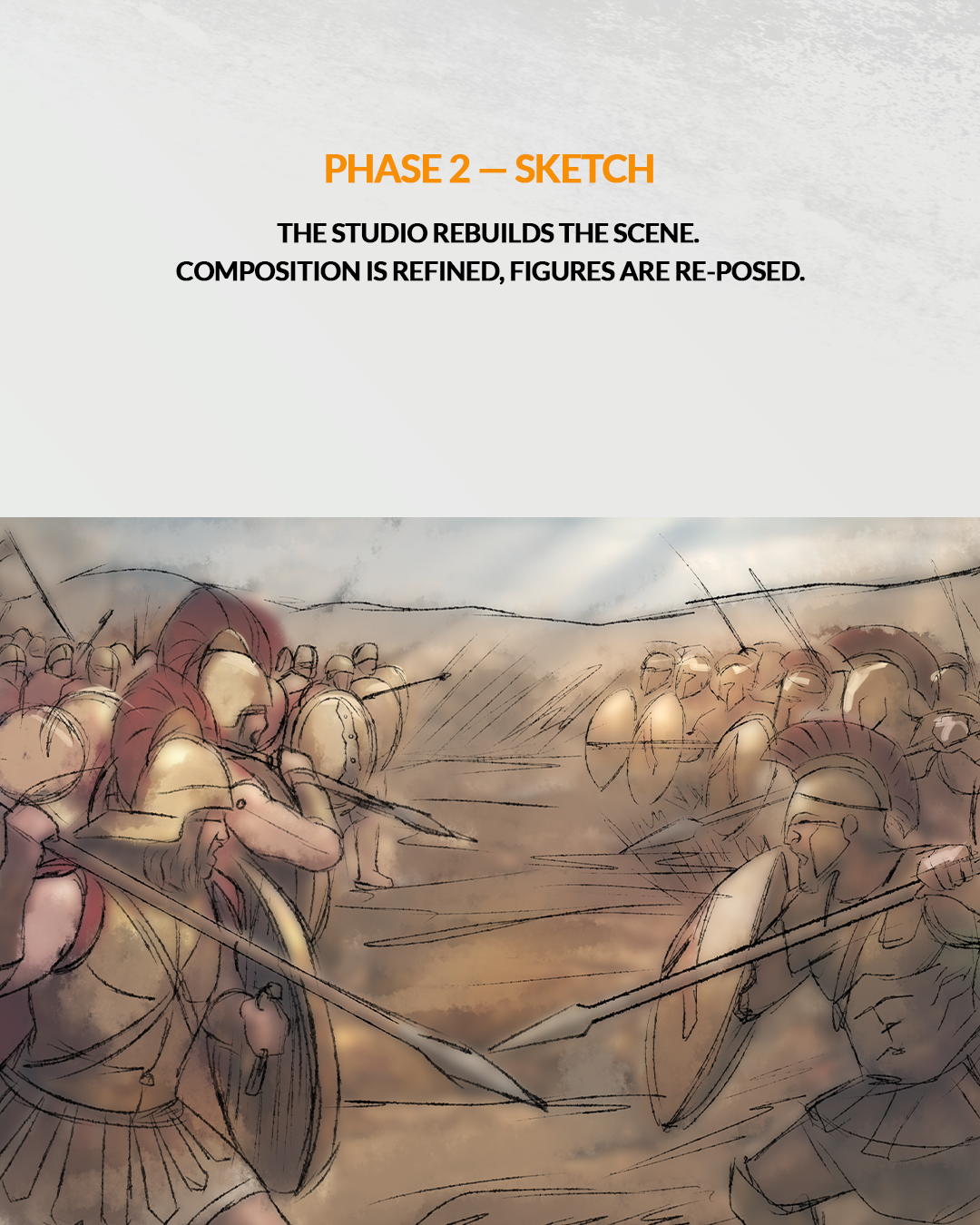
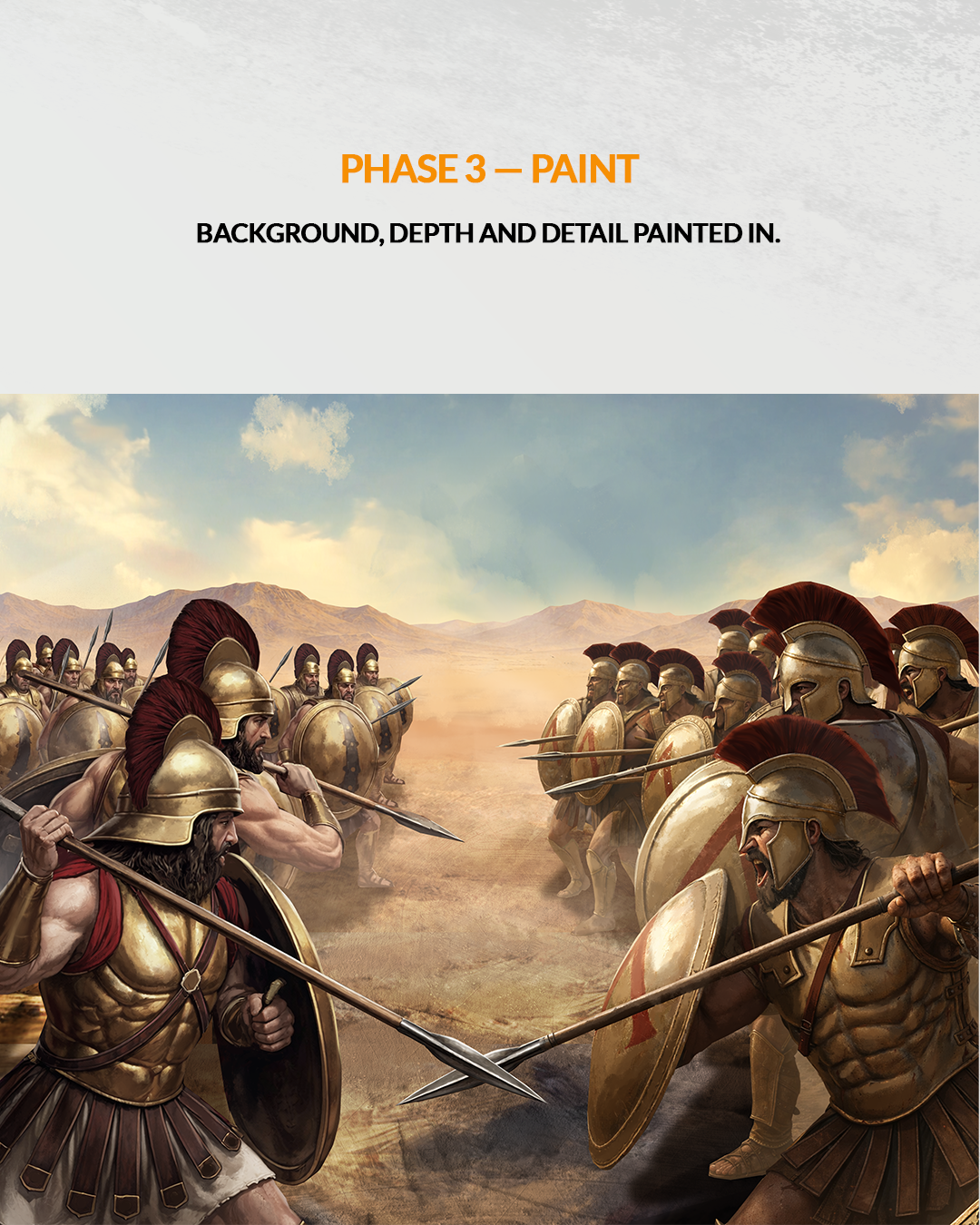
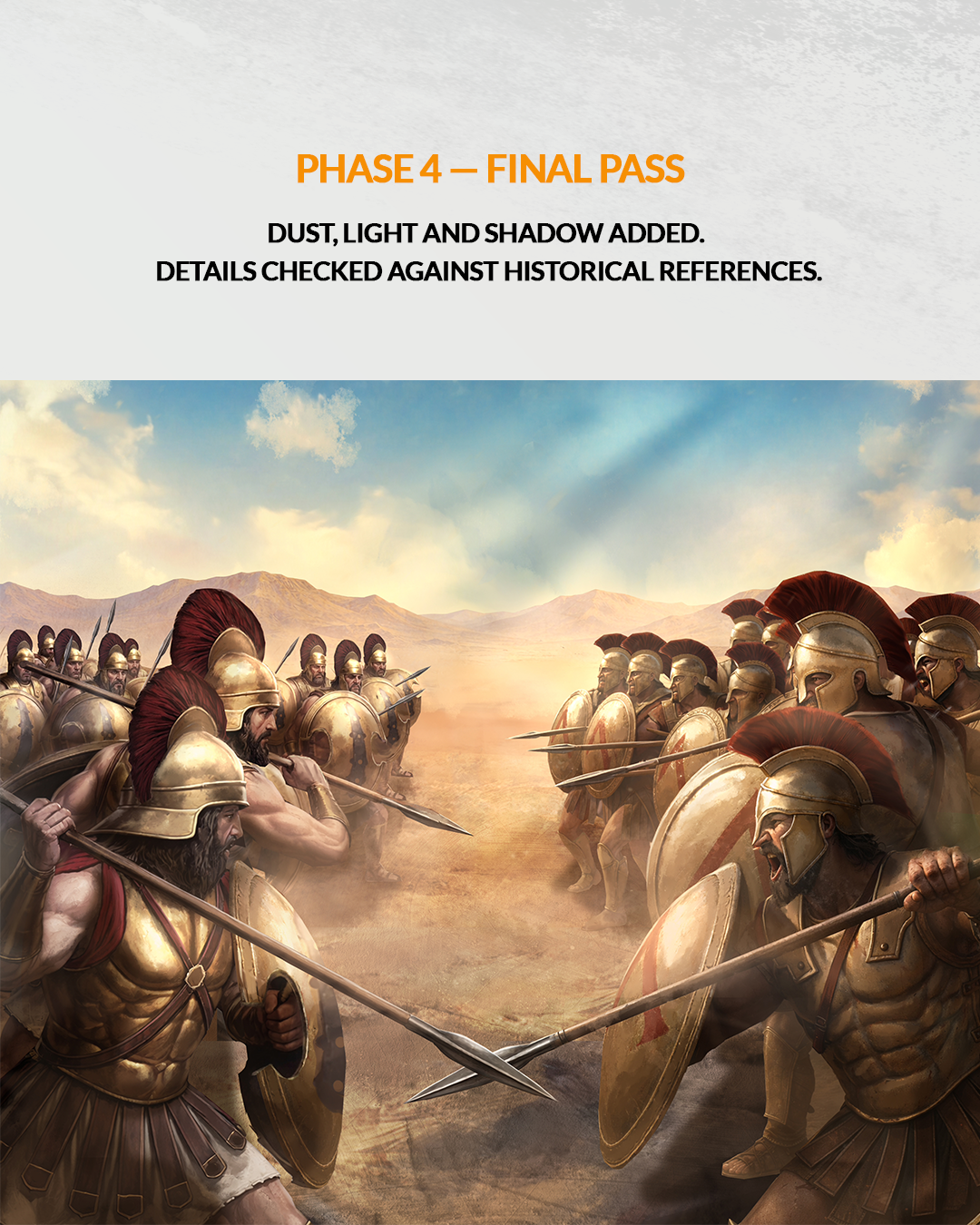
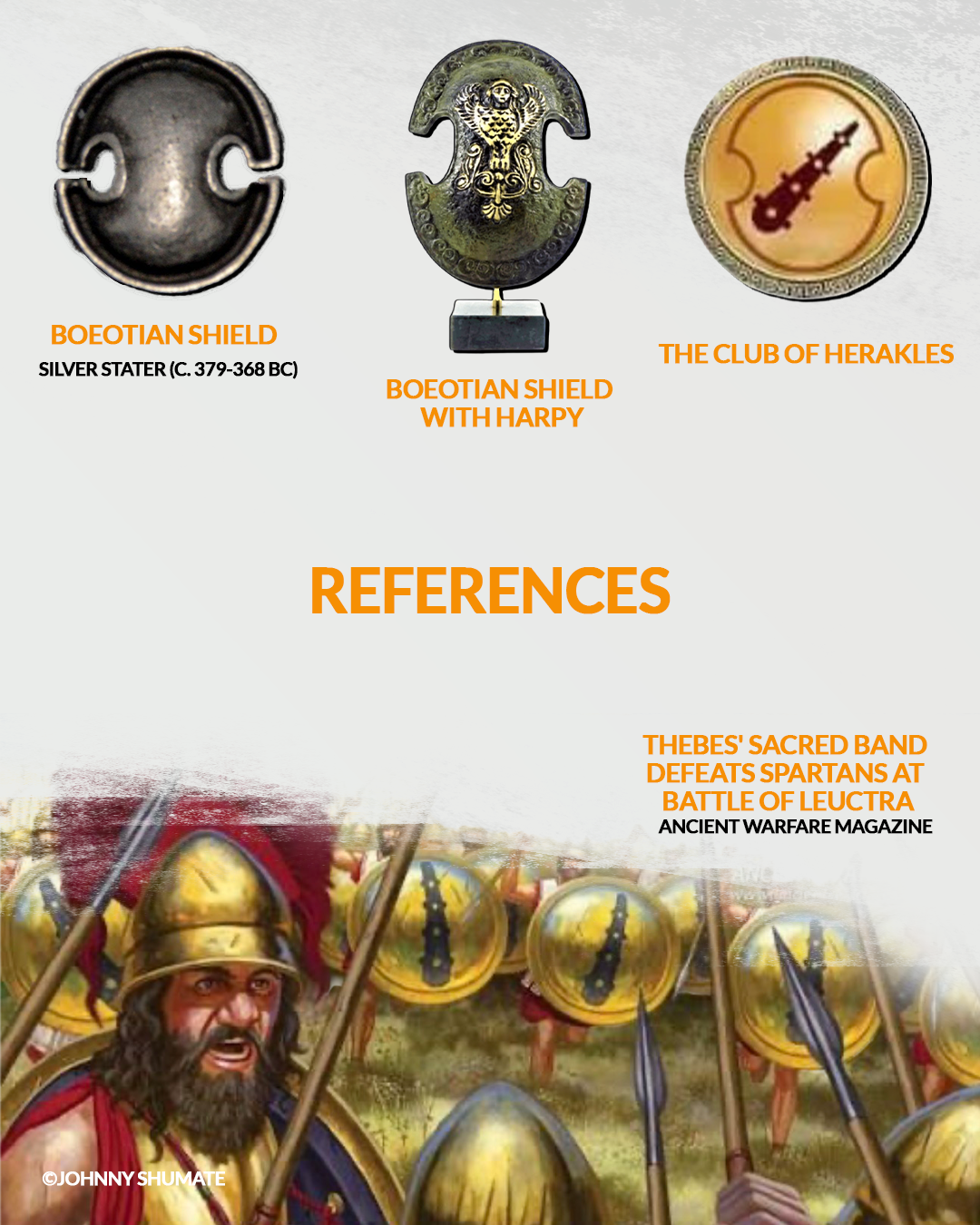
Being transparent about this is the whole reason for the post. I'd rather be clear and direct from the beginning than have you find out sideways later.
Questions and constructive feedback are genuinely welcome — they've made this project better. If anything above is still unclear, ask and I'll answer it.
Thanks a lot,
OJ
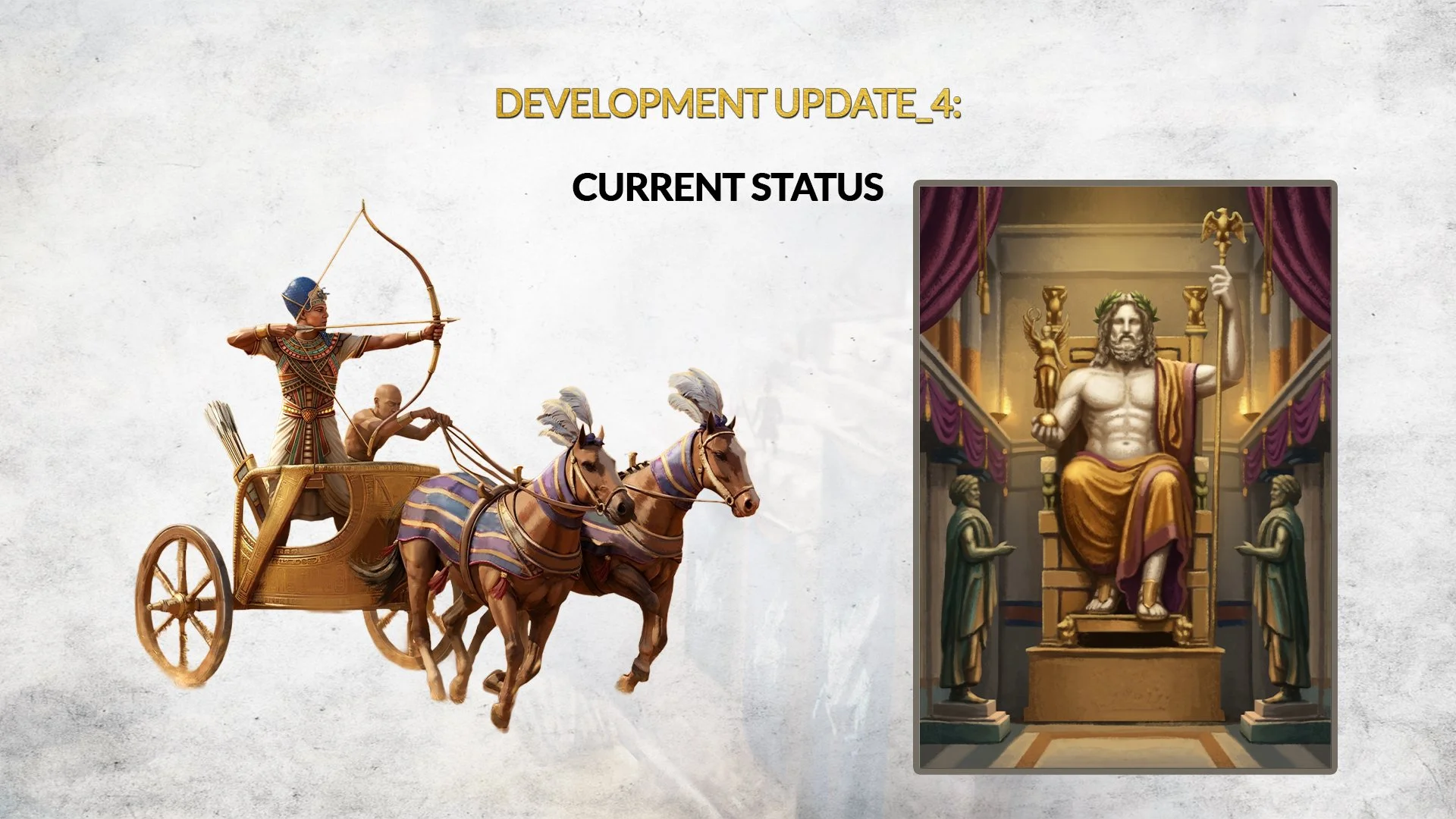
Development Update_4: Current Status
Hello everyone,
It has been some time since our last update, and I truly appreciate your patience and continued support.
As an independent author developing this game while living in the Middle East, the recent events and ongoing conflict in the region over the past few months have naturally slowed down the progress. However, development has not stopped. My goal remains the same: to release a physical version of Epochia that you will be able to support and purchase during 2026.
At the same time, several teams are helping me improve different parts of the game, and some elements have required more time than originally planned. I believe this extra time is important to make sure the final result feels polished, balanced, and worthy of your support.
Right now, we have finished new illustrations and we are finalizing the overall box design, so the game can move closer to the next production prototype. I do not want to share an exact date yet — I do not want to jinx it — but I can say that progress is moving forward, and hopefully, more exciting updates will be coming soon.
Thank you again for your patience, encouragement, and belief in this project.
OJ
Gameplay Overview - Learn the path to victory
In this section, I will guide you through the individual phases of each round, explaining how the game flows and what actions players can take during their turns. From diplomacy and movement to battles, resource collection, and strategic decisions, each phase offers unique opportunities to expand your influence, strengthen your empire, and outmaneuver your rivals on the path to victory.
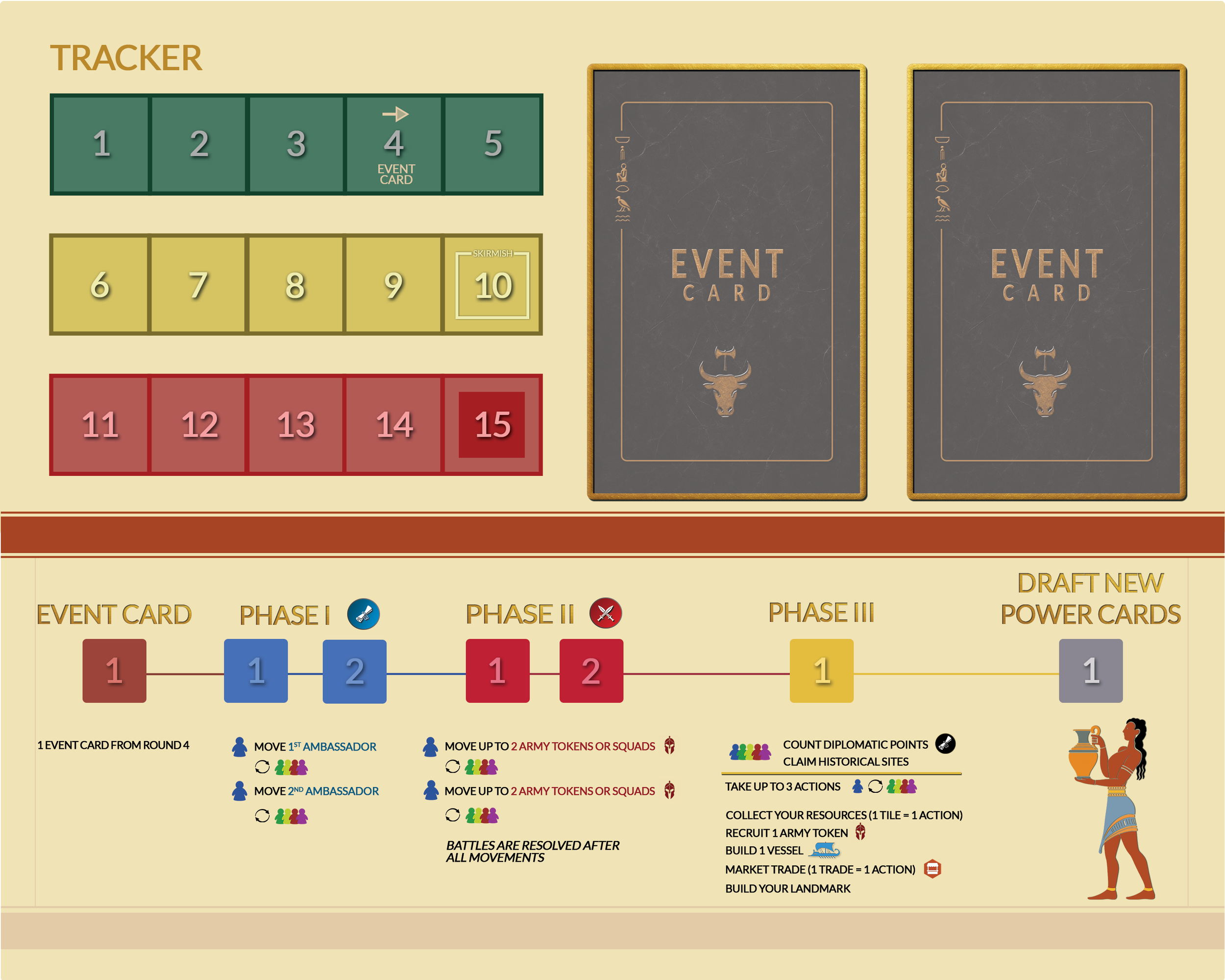
A game of Epochia is played over 15 rounds, with each round divided into 3 main phases that shape the flow of strategy, conflict, and development. Starting from Round 4, Event Cards begin to appear, bringing fresh challenges and new opportunities that can affect all players and keep every game dynamic. Throughout the game, players may also expand their tactical options through the Power Card draft system, adding another layer of planning and adaptability as the map evolves.
At the beginning of the game, each nation starts with 10 banners, which are used to mark and maintain control over territories across the map, and 2 ambassadors, who are ready to begin exploration, diplomacy, and expansion from the very first round. The rest of a nation’s strength must be built over time. Players will need to recruit army tokens and construct ships as the game progresses, up to a maximum of 10 army tokens and 3 ships. This creates a balanced start for all players while rewarding those who can develop their nation efficiently and make the most of every round.
Shape the map before war begins!
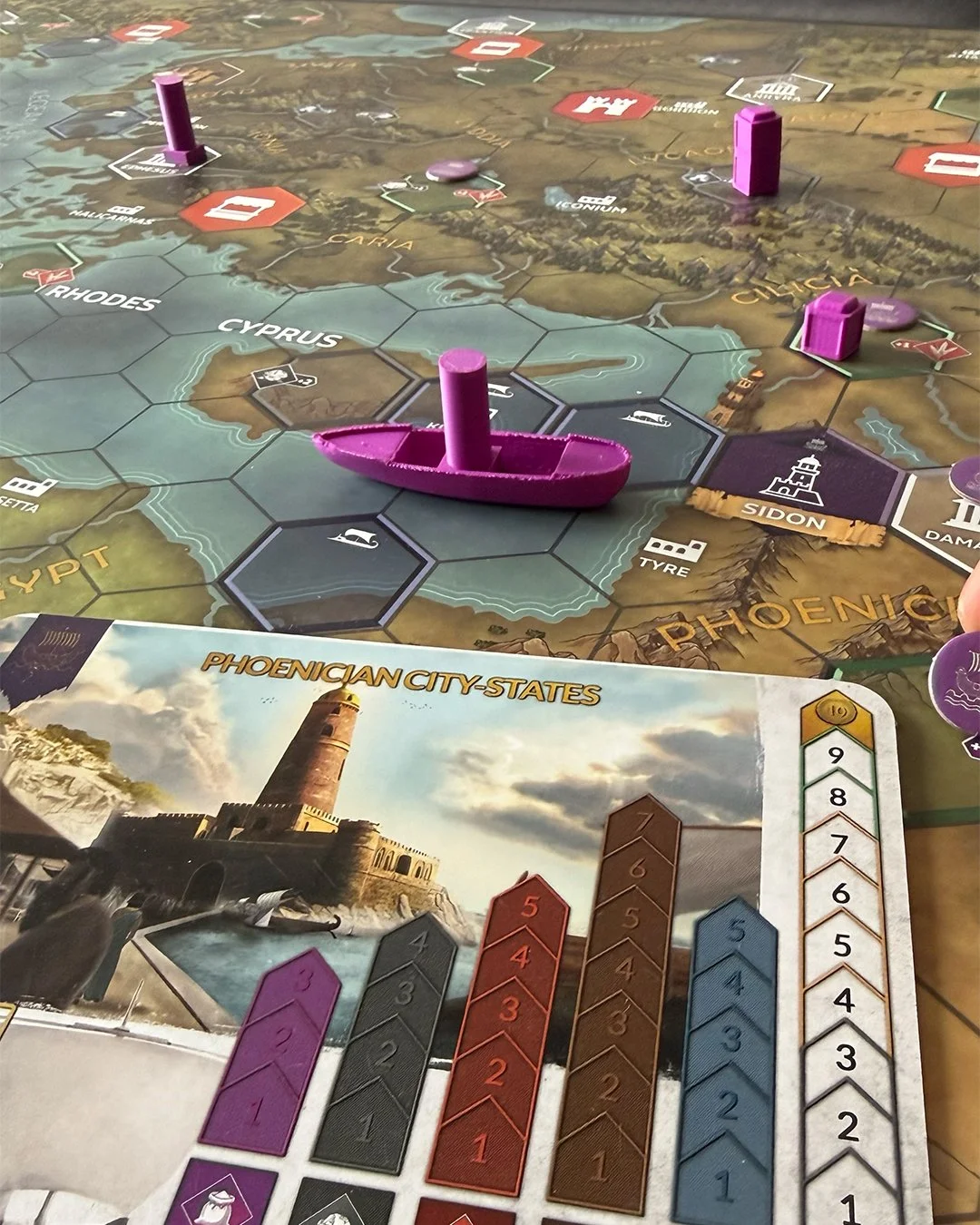
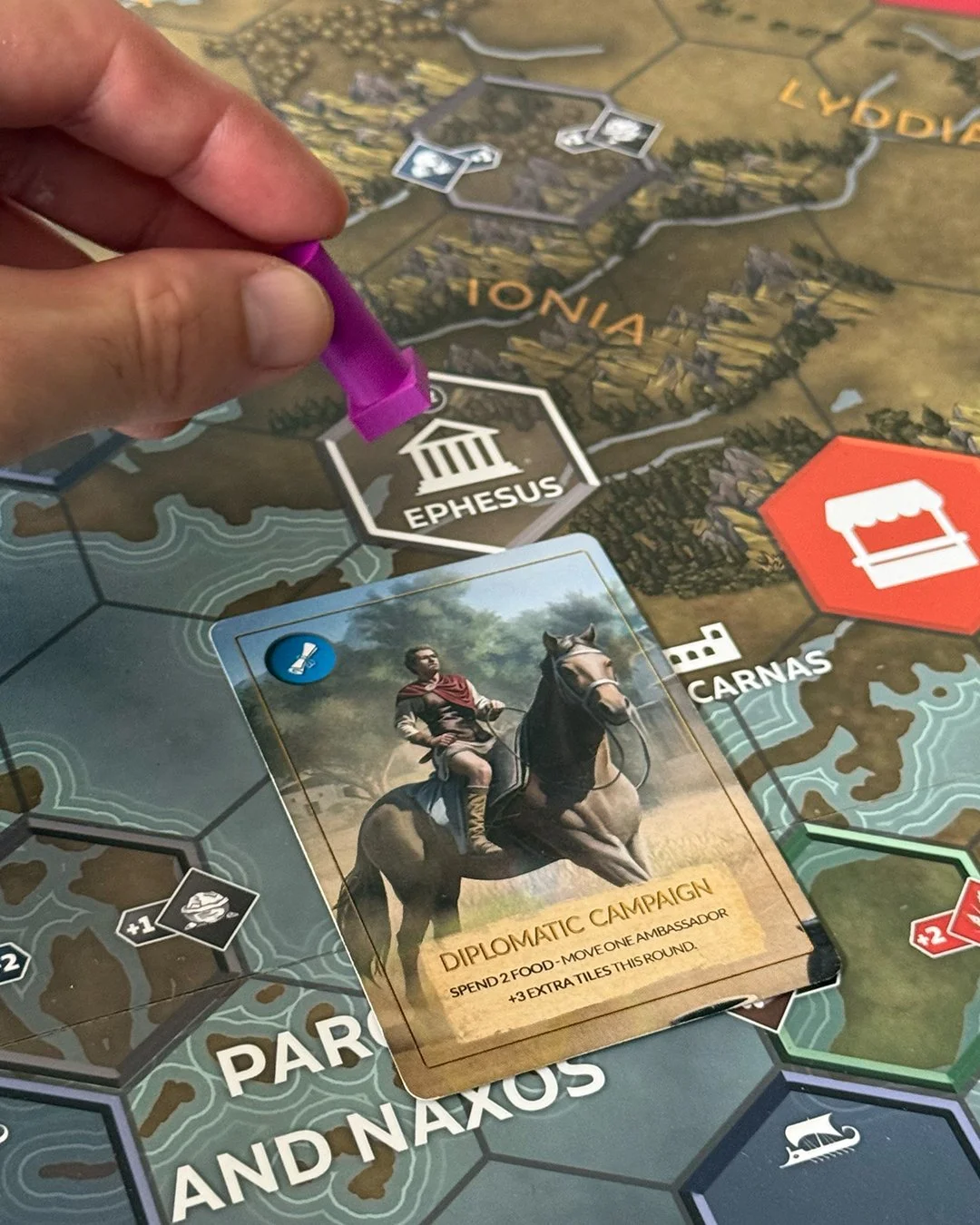
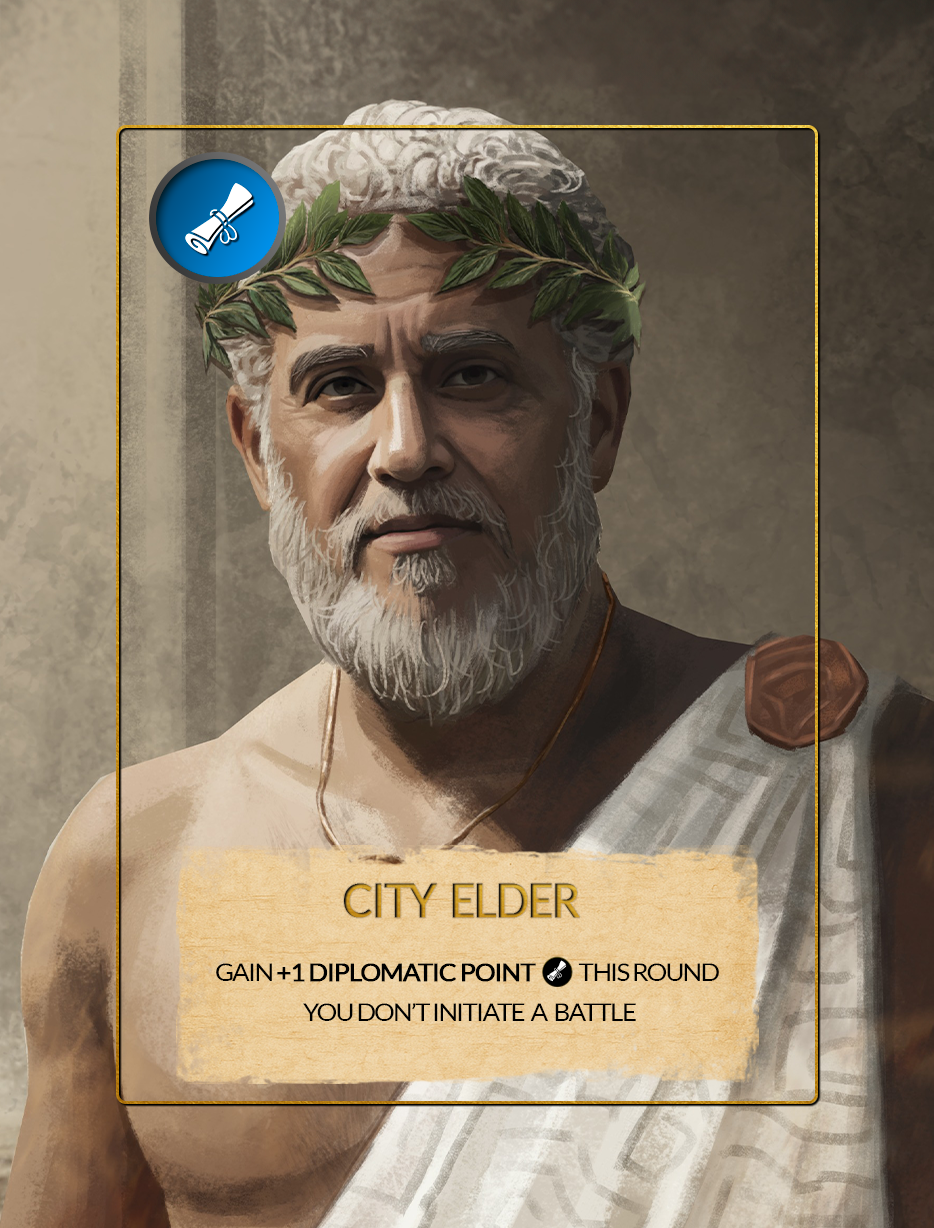
The Diplomatic Phase is the opening stage of each round, where players begin shaping their strategy through movement, expansion, and negotiation. This phase is played in two turns. During these two turns, 2 ambassadors travel across the map to claim cities and resource tiles, access markets, form alliances, historical sites and position themselves for future opportunities.
Each ambassador has a fixed movement of 3 tiles, though this can be modified by Power Cards when used. This simple and clear movement rule was designed to give players greater control over their positioning while still creating meaningful tactical choices. Nations that have a ship may also sail across the seas, allowing their ambassadors to explore more distant regions and islands where valuable rewards and strategic benefits await.
Pro Tip: Plan your ambassador movement carefully, as the fixed range of 3 tiles gives you strong control over positioning and future opportunities. Do not focus only on nearby rewards, because ships can help you reach distant islands and valuable locations that may offer stronger long-term benefits. Use Power Cards wisely, since even a small bonus at the right moment can completely change your options. Securing key city and resource tiles early can build momentum, while smart diplomacy, alliances, and blocking important paths can be just as powerful as direct conflict. Always try to think one phase ahead, because the strongest moves in the Diplomatic Phase are often the ones that prepare you for success later in the round.
Victory favors the bold and prepared.
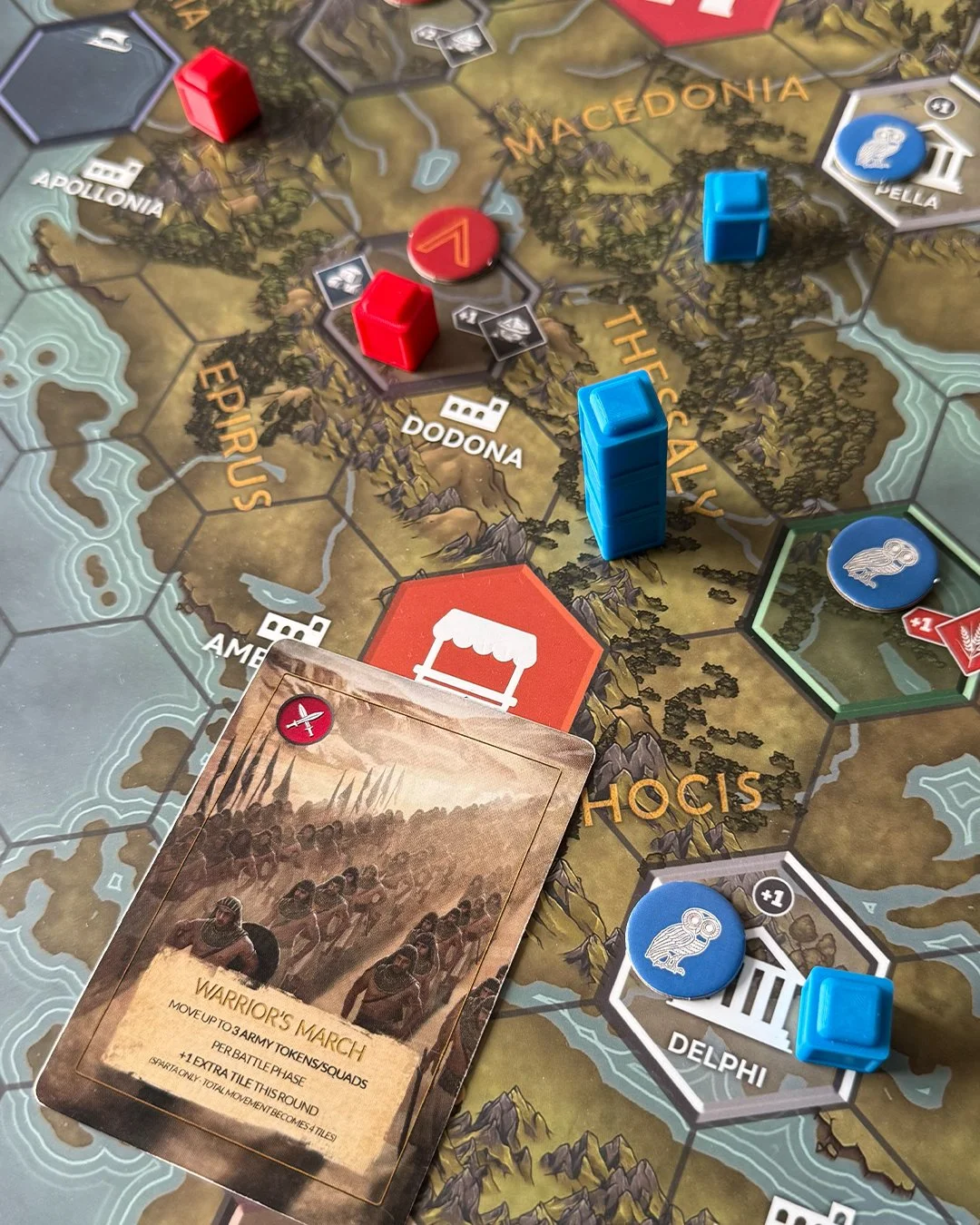
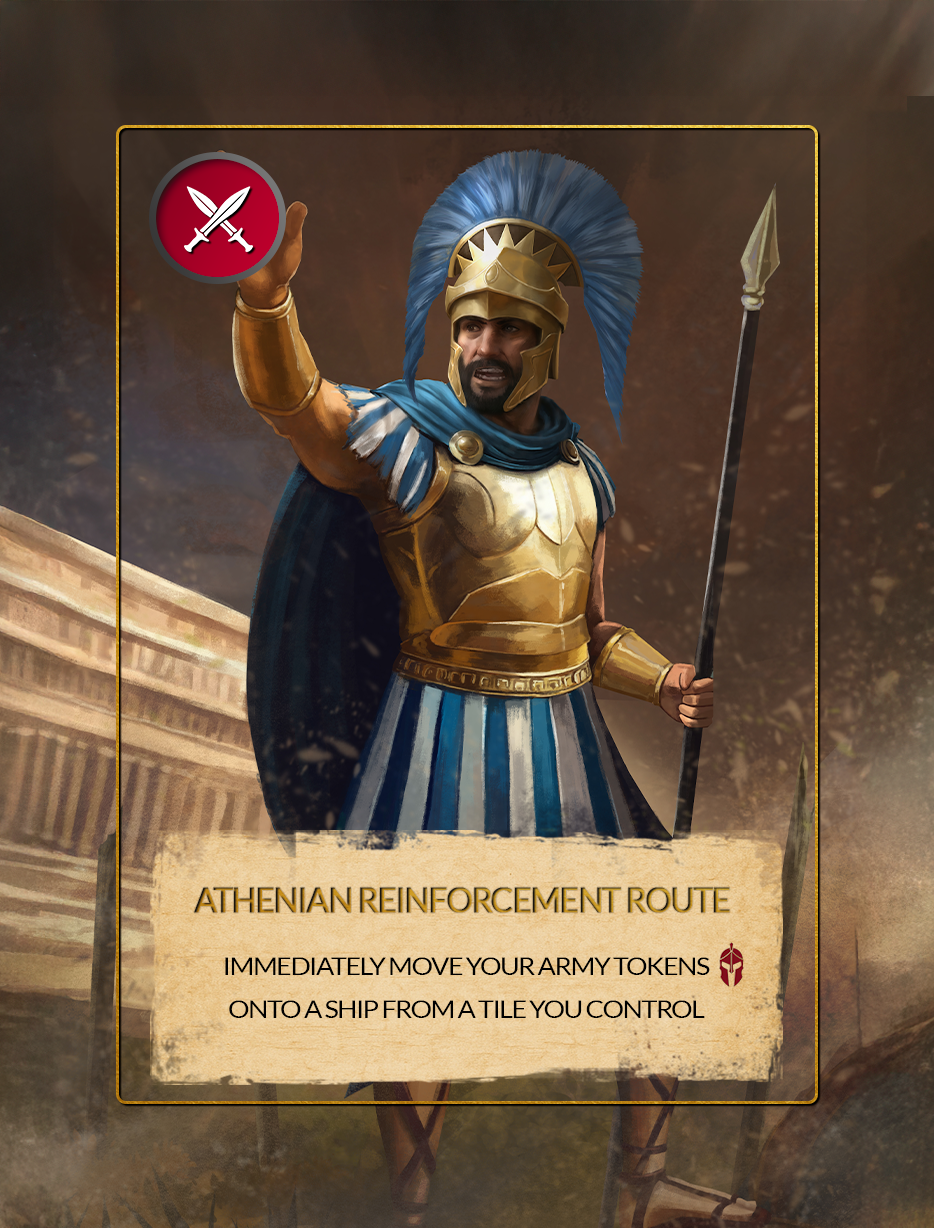
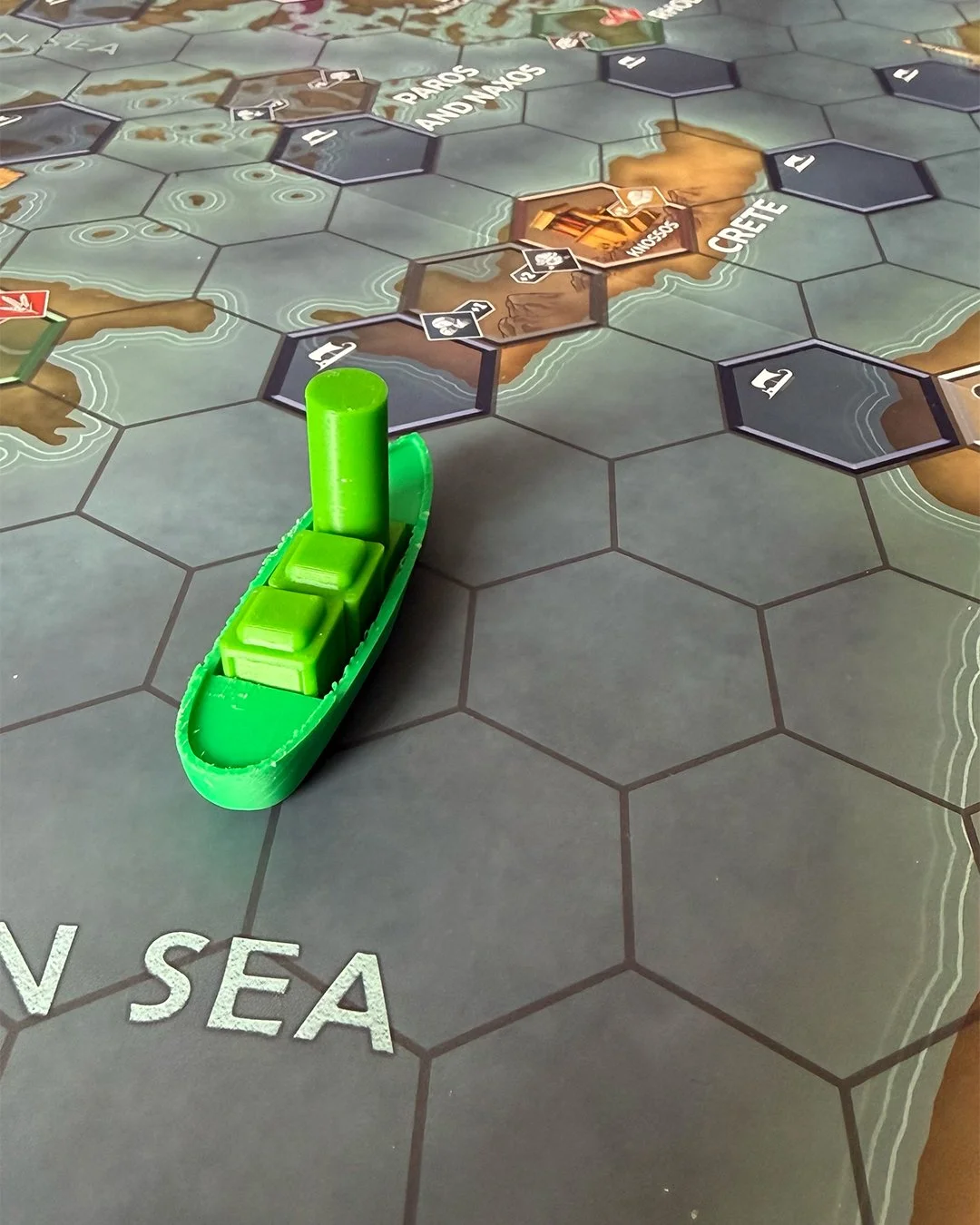
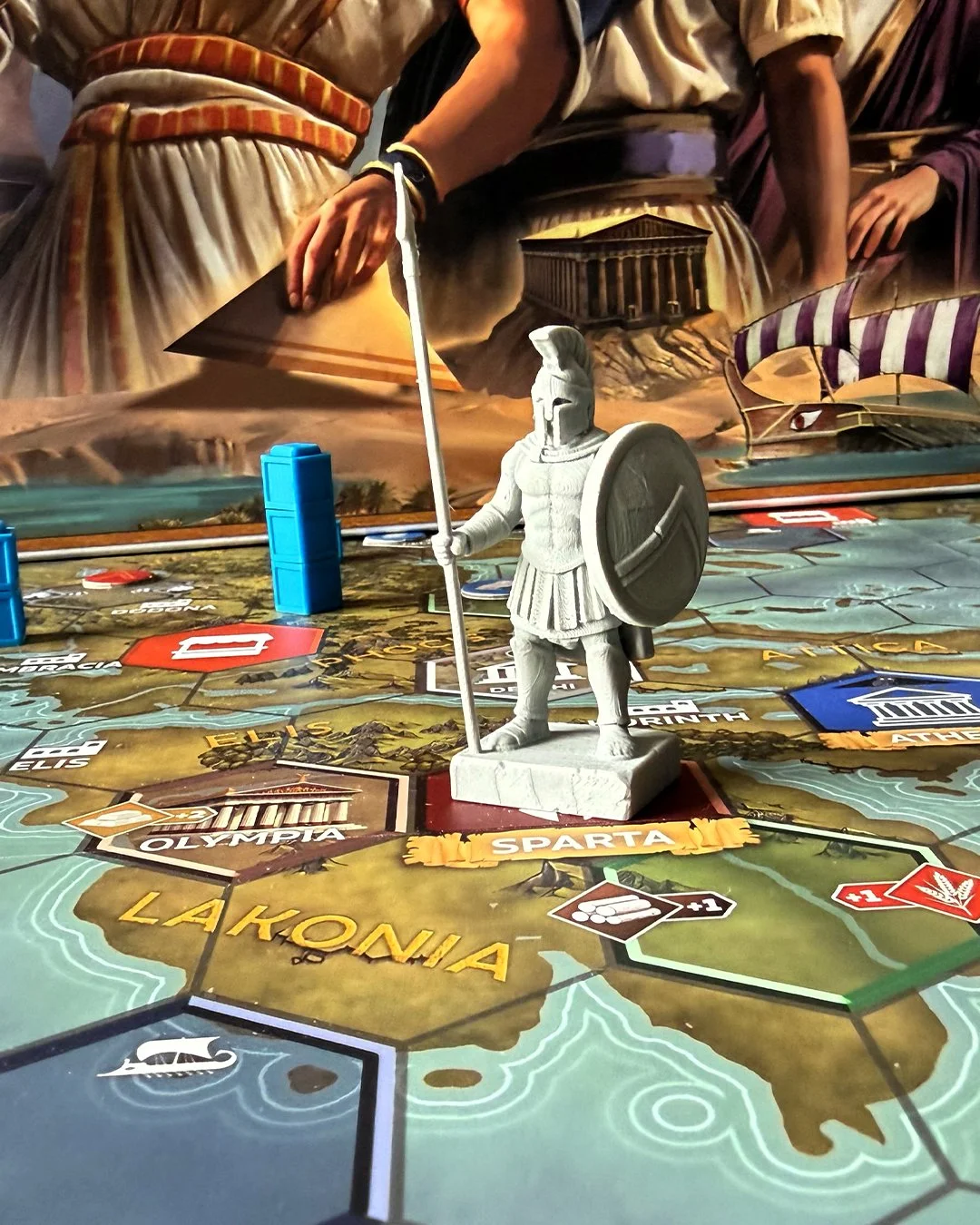
The Battle Phase is where military strength, timing, and tactical execution decide the fate of the map. This phase is played in two turns, and in each turn every player may move up to 2 army tokens or squads for 2 tiles (Sparta 3 tiles as their passive ability), following the same player order used in the Diplomatic Phase. Battles can take place both on land and at sea, creating constant pressure across cities, resource routes, and naval paths. Army tokens may also be combined into squads, allowing players to concentrate their forces into stronger units and create more impactful attacks or defensive positions.
Once all players complete their movements for a turn, battles are resolved wherever opposing forces meet. In combat, the stronger force wins control of the tile and gains 2 Diplomatic Points for victory, while the losing army is removed and must be recruited again later. To help players recover more quickly, the defeated side receives 1 Ore and 1 Crop, making it easier to recruit a new army token in a future round. If both sides have equal strength in a land battle, the battle ends in a stalemate, and all involved forces must retreat.
Naval battles follow the same general rules as battles on land. However, if a sea battle ends in a stalemate, both players lose their ship and all armies onboard. If there is a clear winner, the outcome follows the same result as a ground battle. Power Cards can also be used during this phase to strengthen attacks, improve defense, or shift the momentum of battle, making every clash a major opportunity to reshape the balance of power.
Pro Tip: In the Battle Phase, patience can be just as powerful as aggression. Because battles are resolved after movement, strong positioning and timing often matter more than simply attacking first. Try to think ahead, support your armies with squads when needed, and avoid unnecessary risks that could cost you control of an important tile. A well-planned victory not only weakens your opponent, but also rewards you with 2 Diplomatic Points, while even a defeat can help you recover with resources to rebuild.
Do not underestimate the value of alliances during the Battle Phase. Allies can support each other in combat, whether fighting together on land or even traveling and battling from the same ship, which can make joint attacks far more powerful and unpredictable. Good coordination with an ally can help you secure key victories, pressure stronger opponents, and protect important positions more effectively than fighting alone. When used well, teamwork can completely change the balance of battle.
Build wisely, prepare for what comes next!
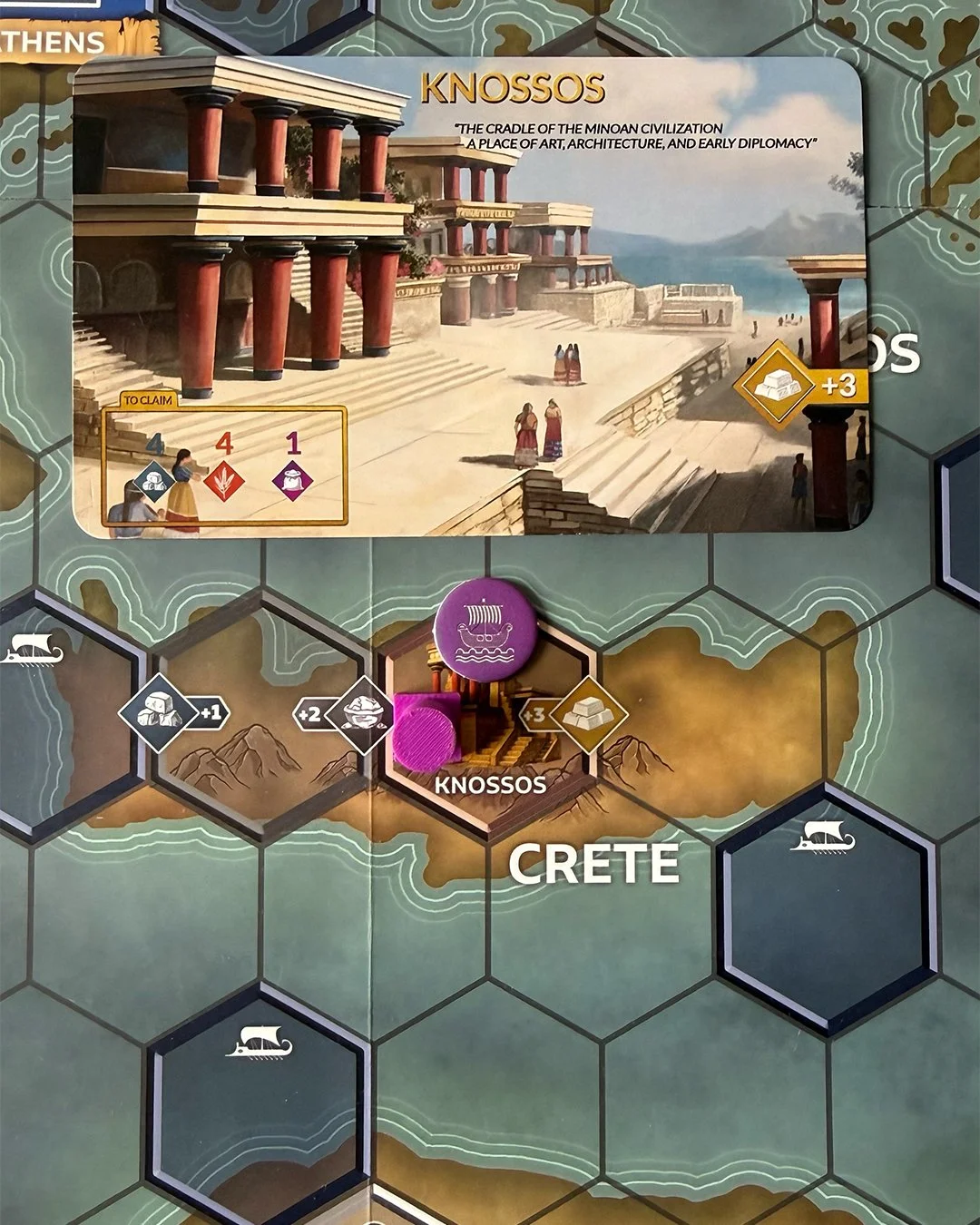
The Collection Phase is where players enjoy the rewards of their progress and prepare for the next round. First, each player counts the Diplomatic Points earned from cities that are successfully claimed or defended under their banner. Players who control a historical site also receive the Gold or other special benefit it provides. If an ambassador is present on a historical site and all requirements have been met, that site may also be claimed during this phase — and this does not count as one of the 3 actions.
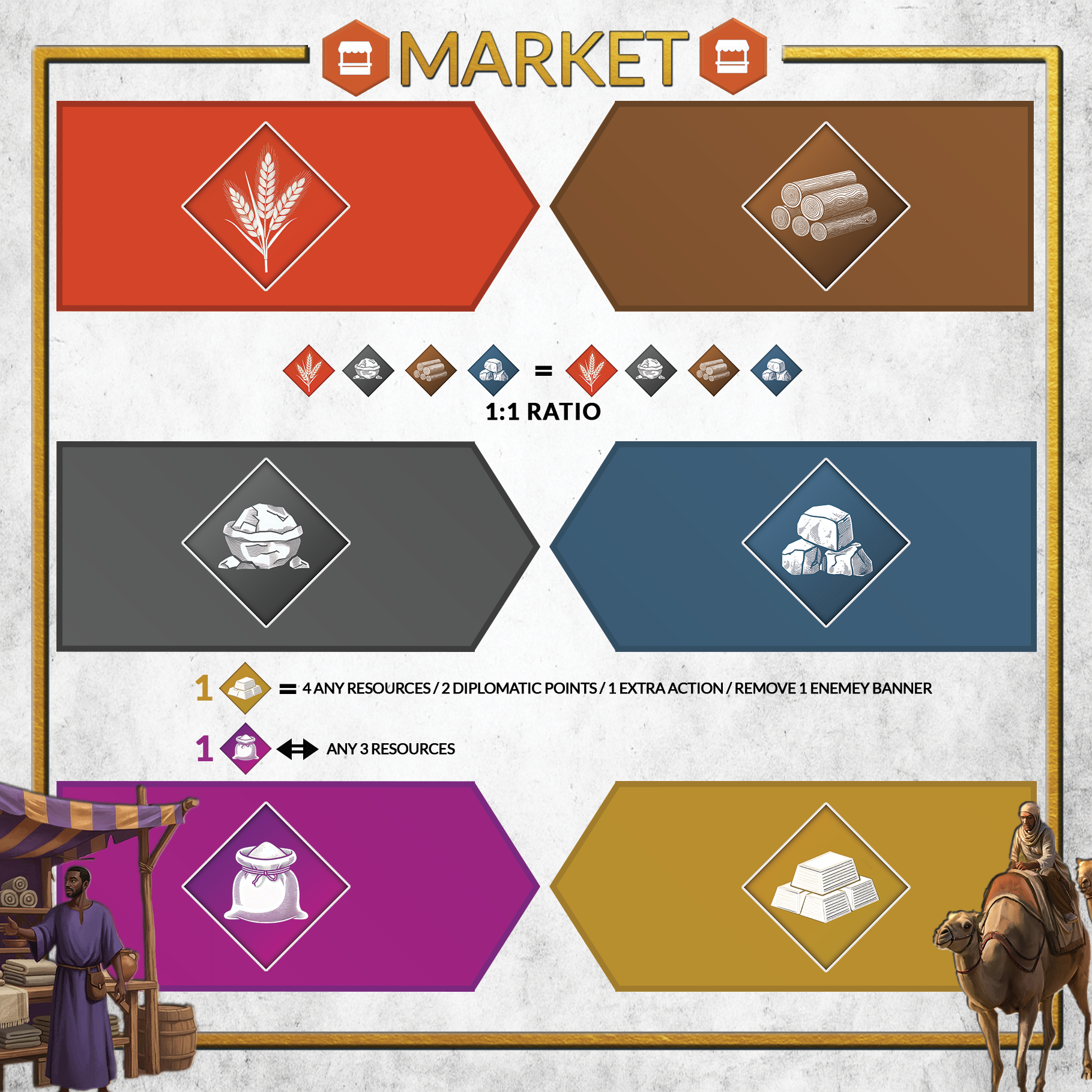
After rewards are collected, each player may take up to 3 actions to develop their nation further. These actions can be used to collect your resources, recruit an army token, build a ship, make a market transaction if an ambassador is on a market tile, or construct a landmark if its requirements have been fulfilled. Landmarks are especially important, as each one grants a unique permanent ability that can shape a nation’s strategy for the rest of the game. With only 3 actions available, every choice matters, making the Collection Phase an important moment for planning, building, and preparing for what comes next.
Pro Tip: Use the Collection Phase wisely, because it is your main chance to strengthen your nation before the next round begins. Since each nation has a limited storage capacity for resources and a different resource ratio, it is important to think carefully about what you truly need instead of collecting or trading without a plan. Keep in mind that each player may have a maximum of 10 army tokens and 3 ships, so smart timing matters more than simply building as much as possible.
Trust carefully, strike together.
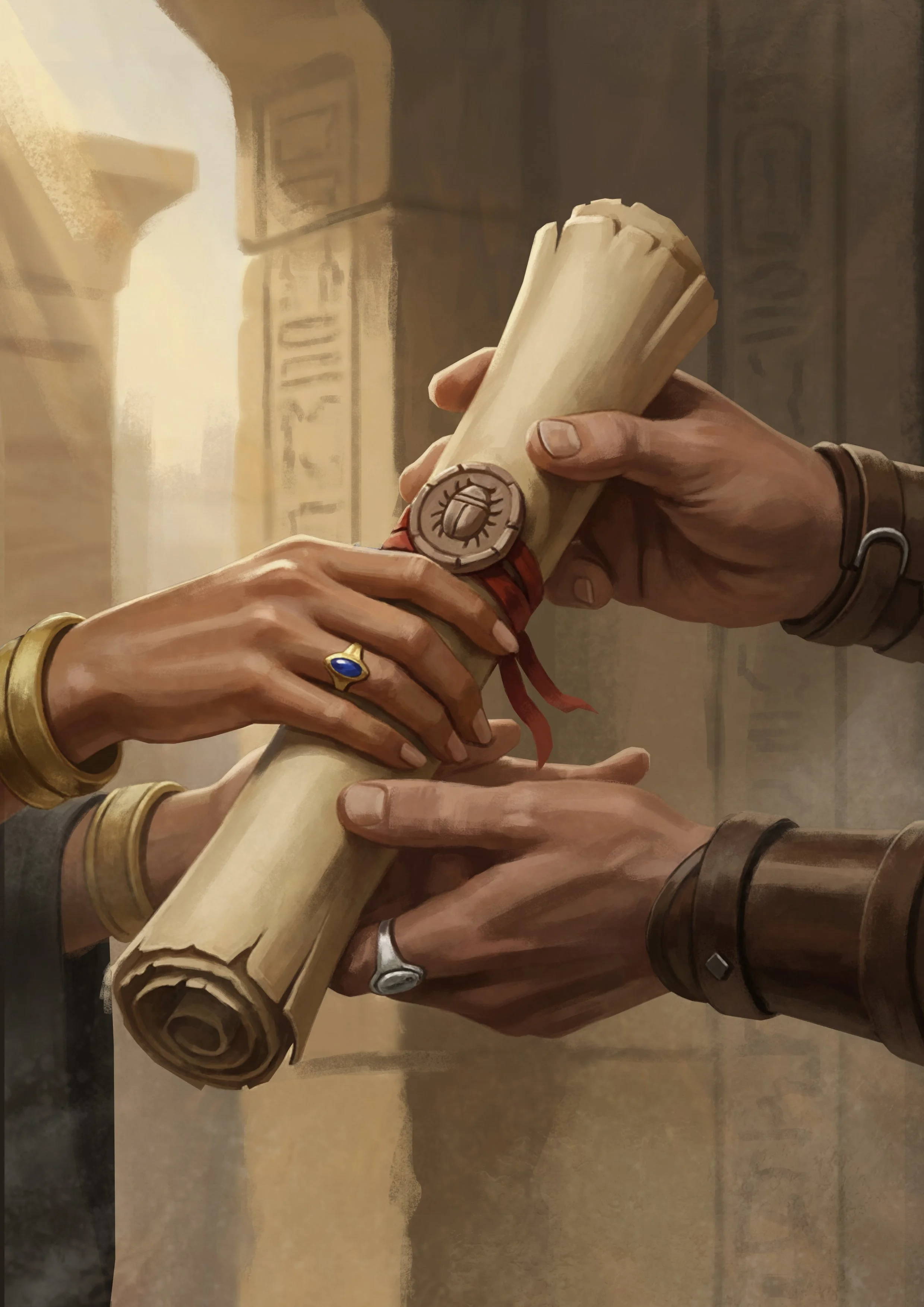
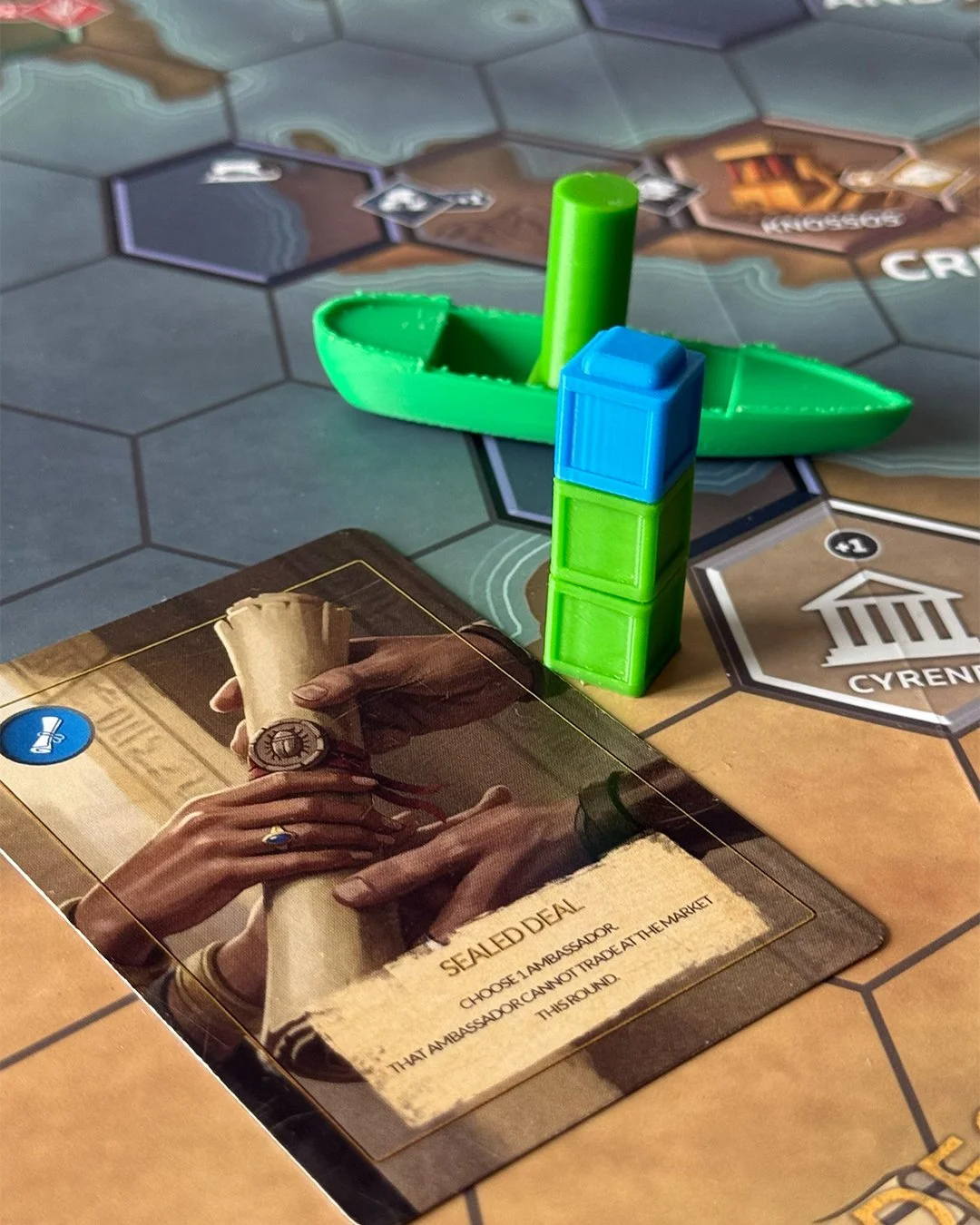
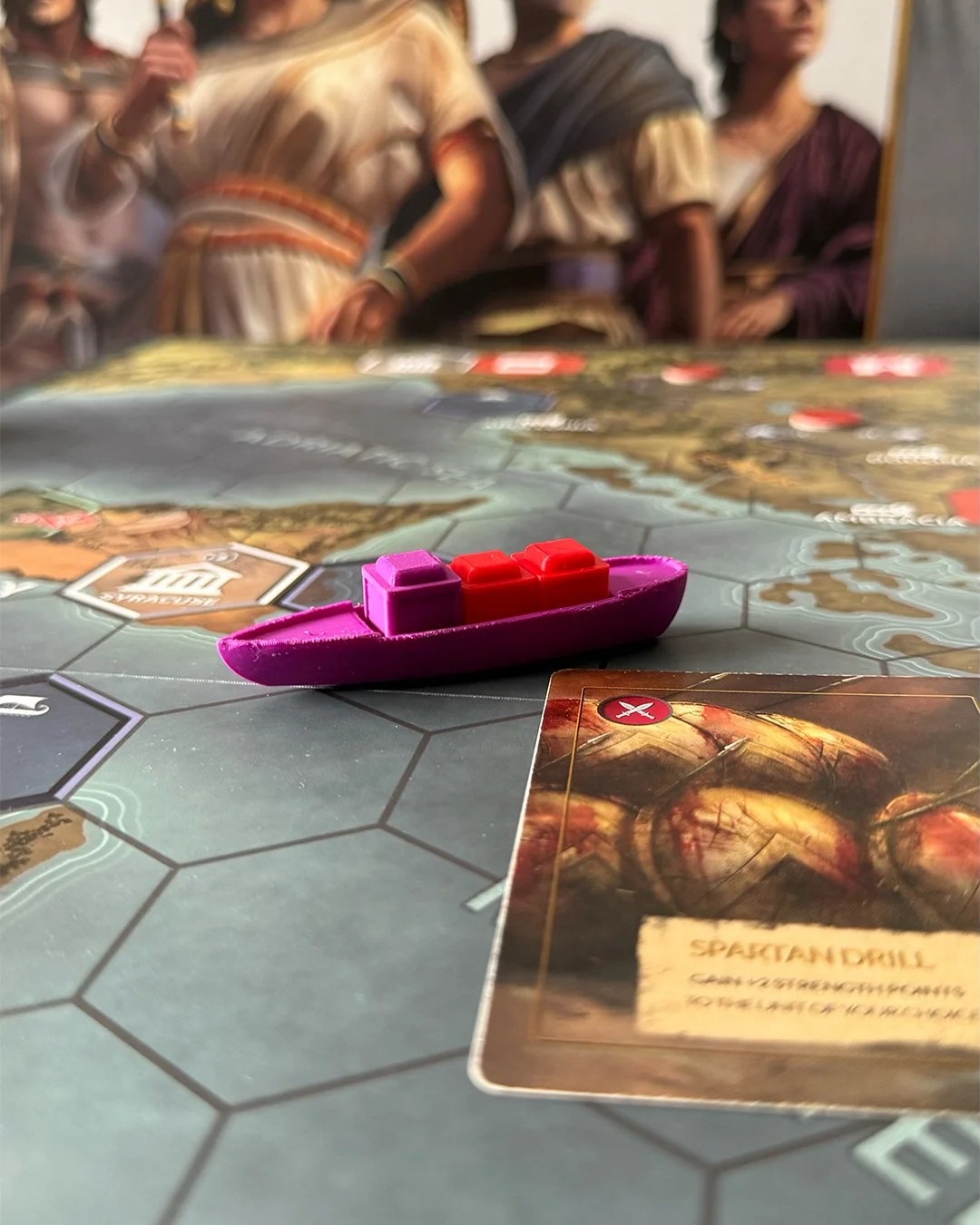
Alliances in Epochia give players the opportunity to strengthen their position through cooperation, negotiation, and shared strategy. An alliance may be formed when an ambassador enters a city tile or capital tile controlled by another player and proposes cooperation. If the offer is accepted, both players exchange their banner tokens as a symbol of their alliance. From that moment on, they may support each other more directly and use their partnership to improve both defense and expansion.
The benefits of an alliance can be significant. Allied players may trade resources directly with one another without needing to use the market, allowing faster and more flexible cooperation. They may also support each other in battles, both on land and at sea, making combined attacks and defenses far more dangerous for their opponents. This creates new tactical options, stronger map control, and the chance to pressure rival nations through teamwork rather than acting alone. However, alliances must be managed carefully, because they can be broken through betrayal, turning trust into a new source of tension and opportunity.
The right card can change everything.
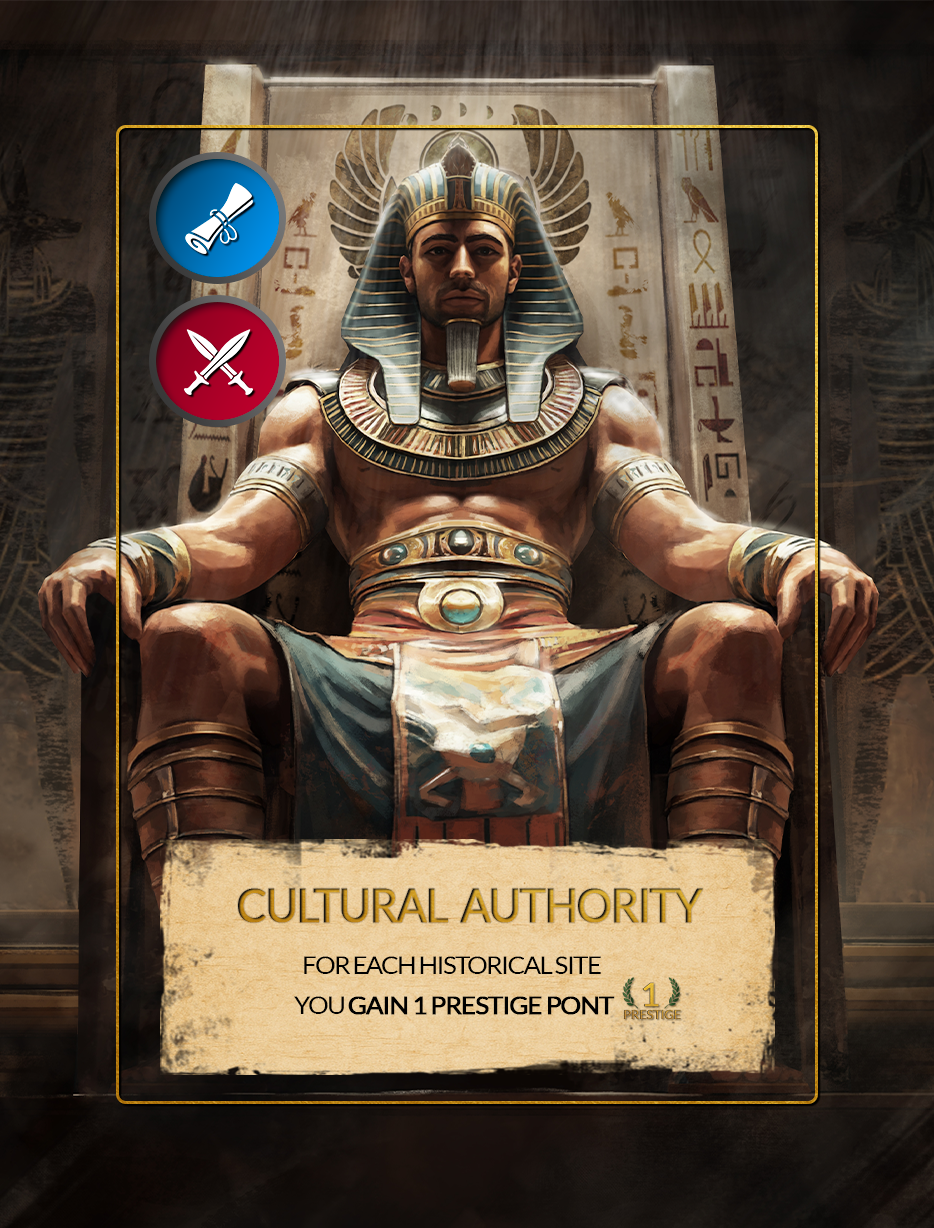
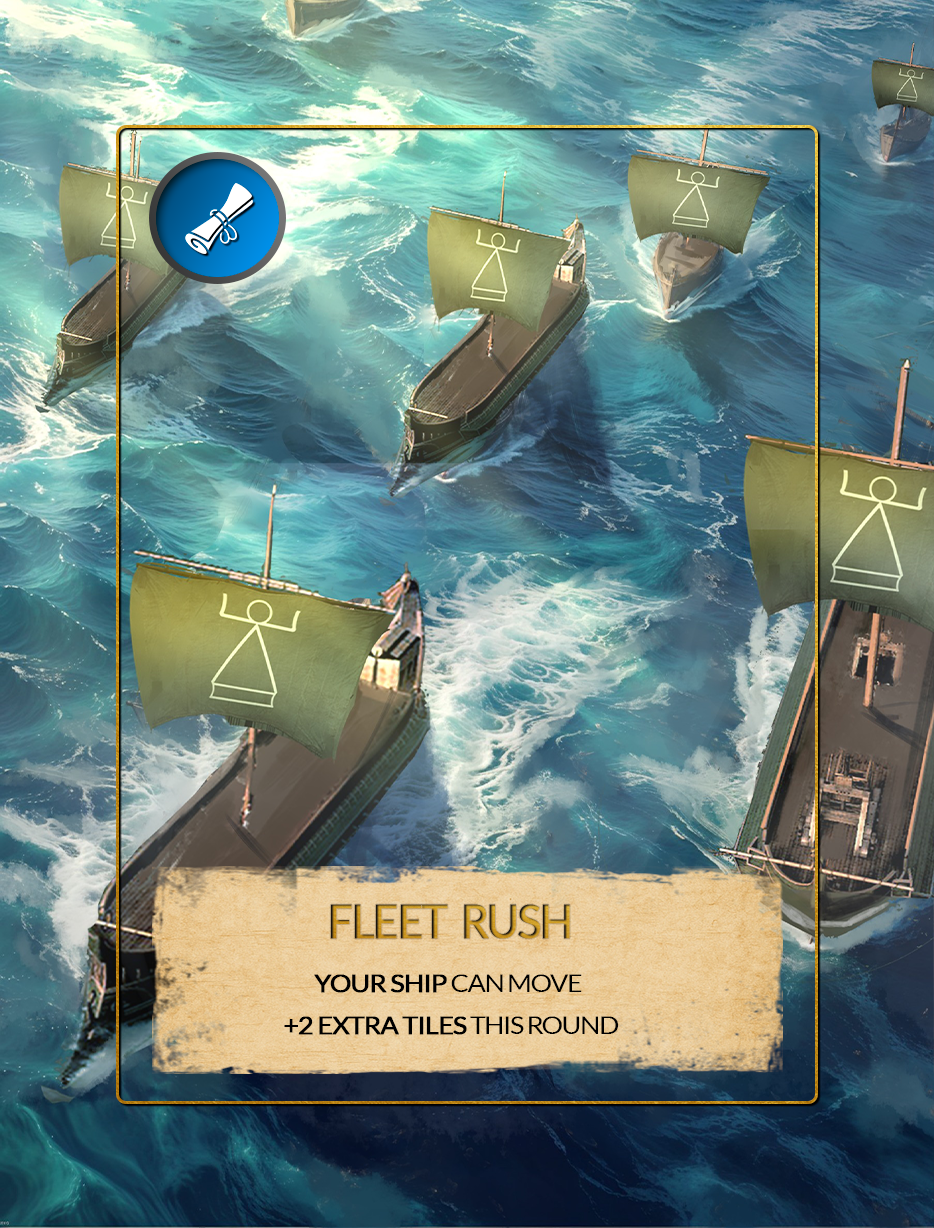
Each player begins the game with 4 Power Cards, giving them a variety of tactical options from the very first round. Throughout the game, players may use a maximum of 2 Power Cards per round. These can be played in different ways depending on strategy — 1 card in the Diplomatic Phase and 1 card in the Battle Phase, both cards in a single phase, or none at all if the player prefers to save them for a later round.
At the end of the round, the Power Card Draft takes place if players have used Power Cards during that round. In the draft, a set number of cards is drawn based on the cards used by players +1 additional card. Each player then chooses 1 card from the available hand and passes the remaining cards to the next player. This continues until every player has selected a card, while the final unchosen card is discarded. The draft system keeps Power Cards balanced and interactive, while also giving players the chance to adjust their strategy, respond to opponents, and plan ahead for the next round.
The world can change in an instant.
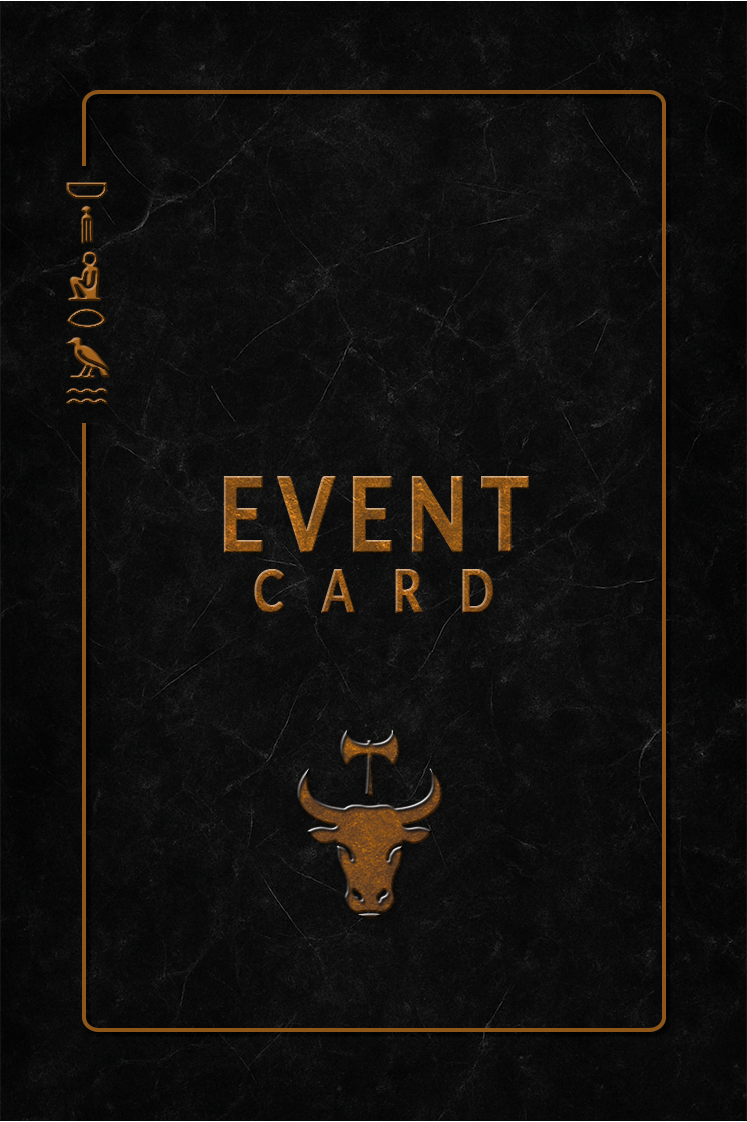
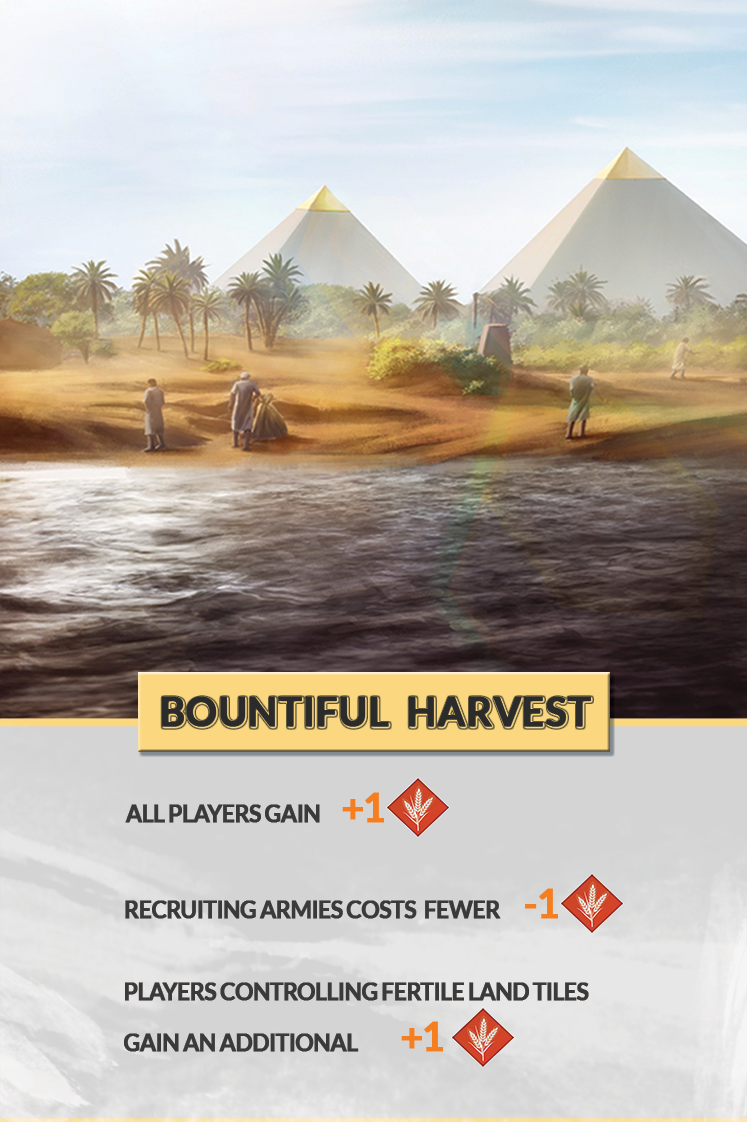
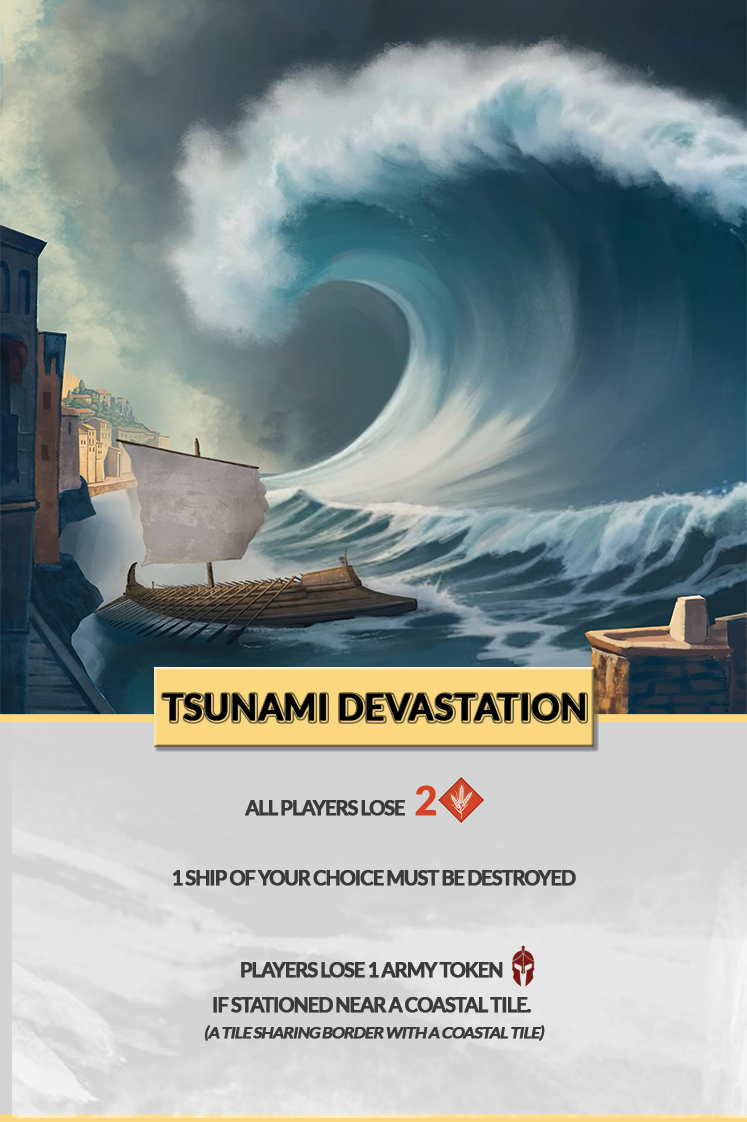
To keep every game fresh and unpredictable, Event Cards introduce changing conditions that can reshape the flow of each round. They are designed to reflect the uncertainty of ancient conflict and shifting fortunes, encouraging players to adapt their plans and respond to new challenges or opportunities as they appear.
Starting from Round 4, one Event Card is revealed at the beginning of each round, introducing a new situation that affects all players and keeps the game dynamic. These events can bring positive opportunities, unexpected challenges, or shifts in the balance of power, forcing nations to adjust their strategy from round to round. Because Event Cards influence every player on the map, they add variety, tension, and an extra layer of unpredictability to each game of Epochia.
Hide your ambition, reveal it at the perfect moment.
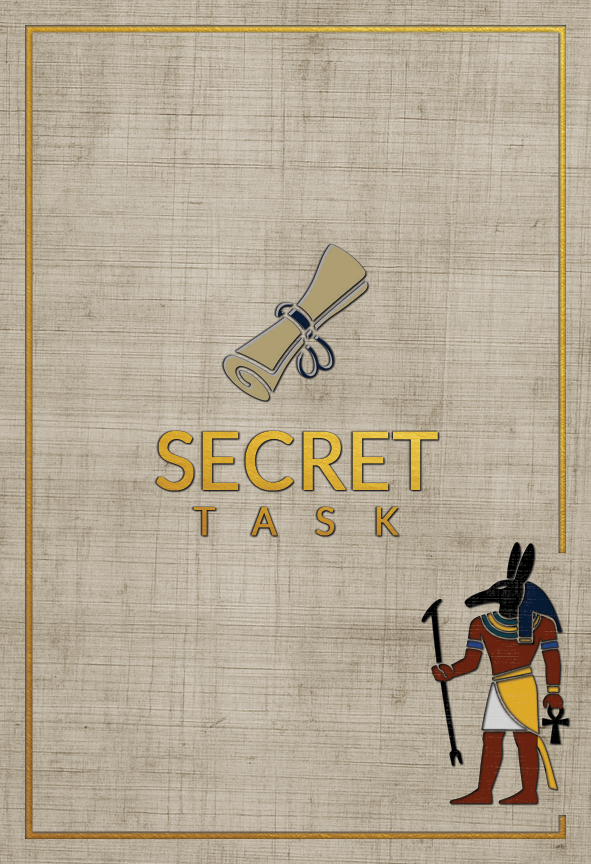
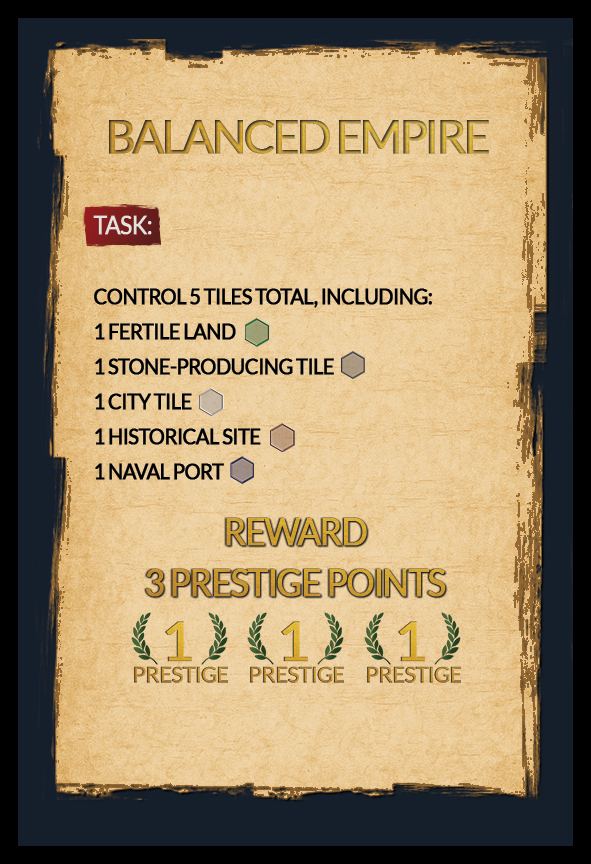
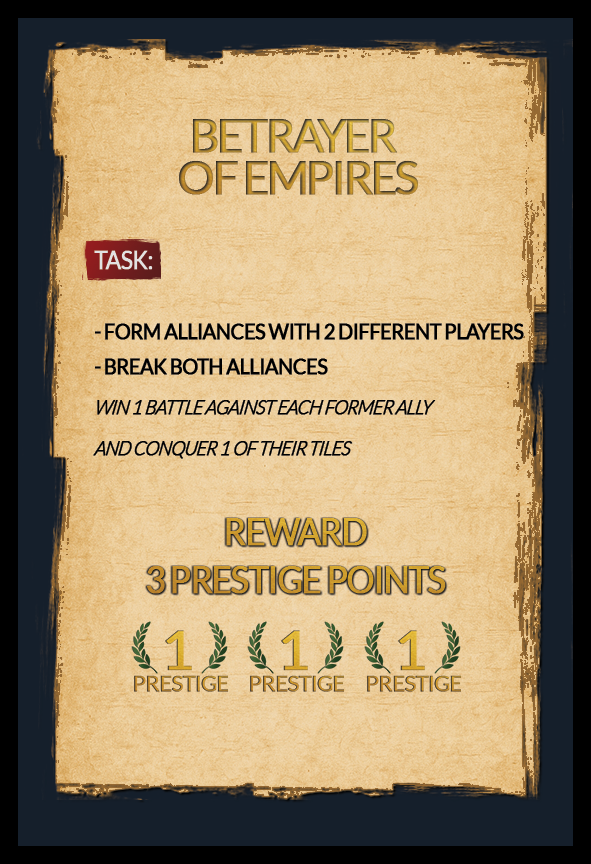
At the beginning of the game, each player draws 1 Secret Task card and keeps it hidden from the other players. If the task is successfully completed during the game, the player immediately gains the listed reward and draws a new Secret Task. This system encourages long-term planning, clever timing, and surprise plays, while making every nation’s path to victory feel more unique.
Prestige Points

In Epochia, Prestige Points are the ultimate measure of success and the main objective of the game. Every decision players make — from expansion and diplomacy to warfare and development — is part of the larger goal of building the greatest civilization on the map. Prestige represents the fame, influence, and lasting legacy of your nation, and the player with the most Prestige Points at the end of the game is declared the winner.
Prestige can be earned in several ways throughout the game. Players gain 1 Prestige Point for every 10 Diplomatic Points they collect, making diplomacy and city control an important path to victory. Prestige may also be earned through successful battles, forming alliances, building landmarks, and completing other important achievements during the game. This creates multiple paths to success and rewards players who can balance military strength, smart diplomacy, and long-term strategic planning.
A strategy game where every choice matters.
Epochia combines diplomacy, tactical warfare, resource management, and long-term planning into one experience that feels both strategic and highly interactive. Unlike many board games that rely heavily on luck or overly complex systems, Epochia is designed to give players more control over their choices through clear movement rules, meaningful alliances, flexible Power Card management, and a phase structure that keeps every decision connected to the next. Its unique mix of land and naval battles, hidden Secret Tasks, evolving Event Cards, nation-specific landmarks, and shared yet competitive map presence creates a dynamic experience where no two games feel the same. The result is a game that rewards smart planning, adaptability, and player interaction, while offering a rich historical atmosphere with modern, engaging mechanics.
If you are reading these lines, it means you have made your way through the full overview of Epochia — and for that, I am truly grateful for your interest and support. If you have any further questions, feel free to leave us a message through the contact form or reach out to us on social media. I will be happy to hear from you.
Thank you,
OJ
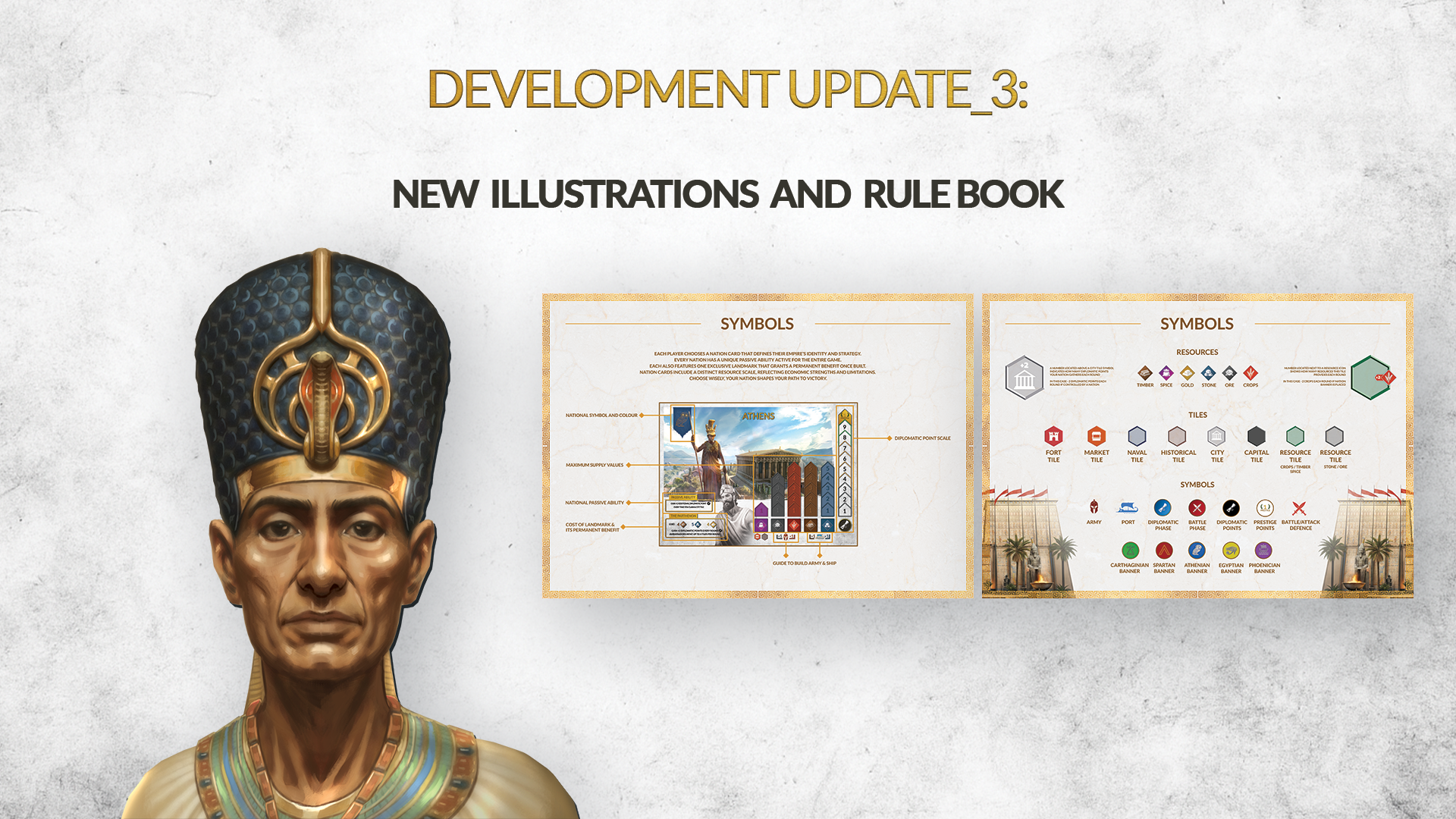
Development Update_3: New Illustrations, new rule book
Hello everyone! It has been a little while since our last Epochia progress update. Even though the world feels a bit chaotic and unpredictable right now, we are still working hard and continuing to move the game forward.
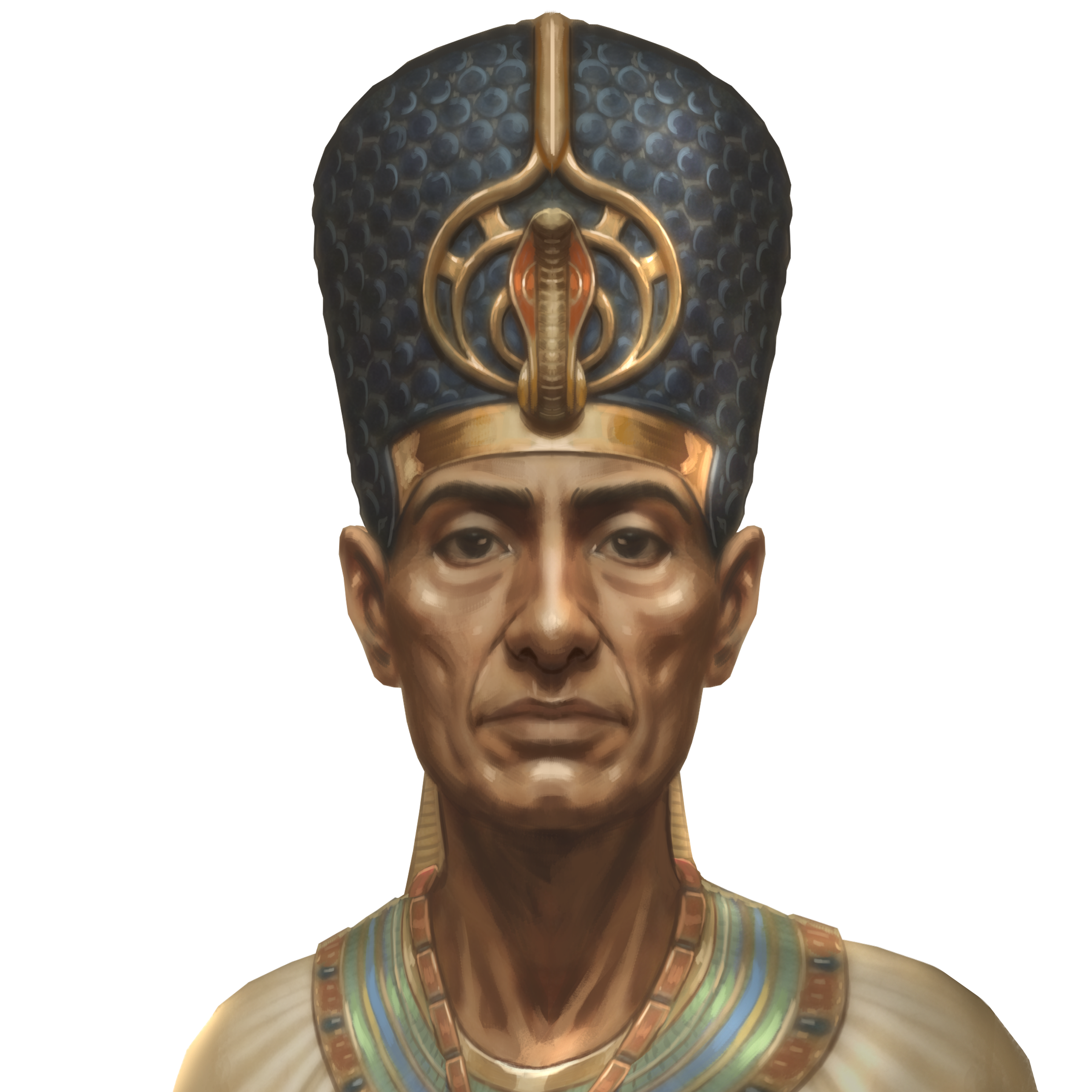
At the moment, we are polishing the final details and steadily pushing Epochia toward its final stage. Since our last post, our artists have done an amazing job bringing Ramses II. to life. We studied real photos of his mummy and used them as inspiration for a reconstruction, while also adding a small touch of fantasy to imagine how Ramses II. may have looked in his prime. I am personally very happy with the result, and I would love to know what you think.
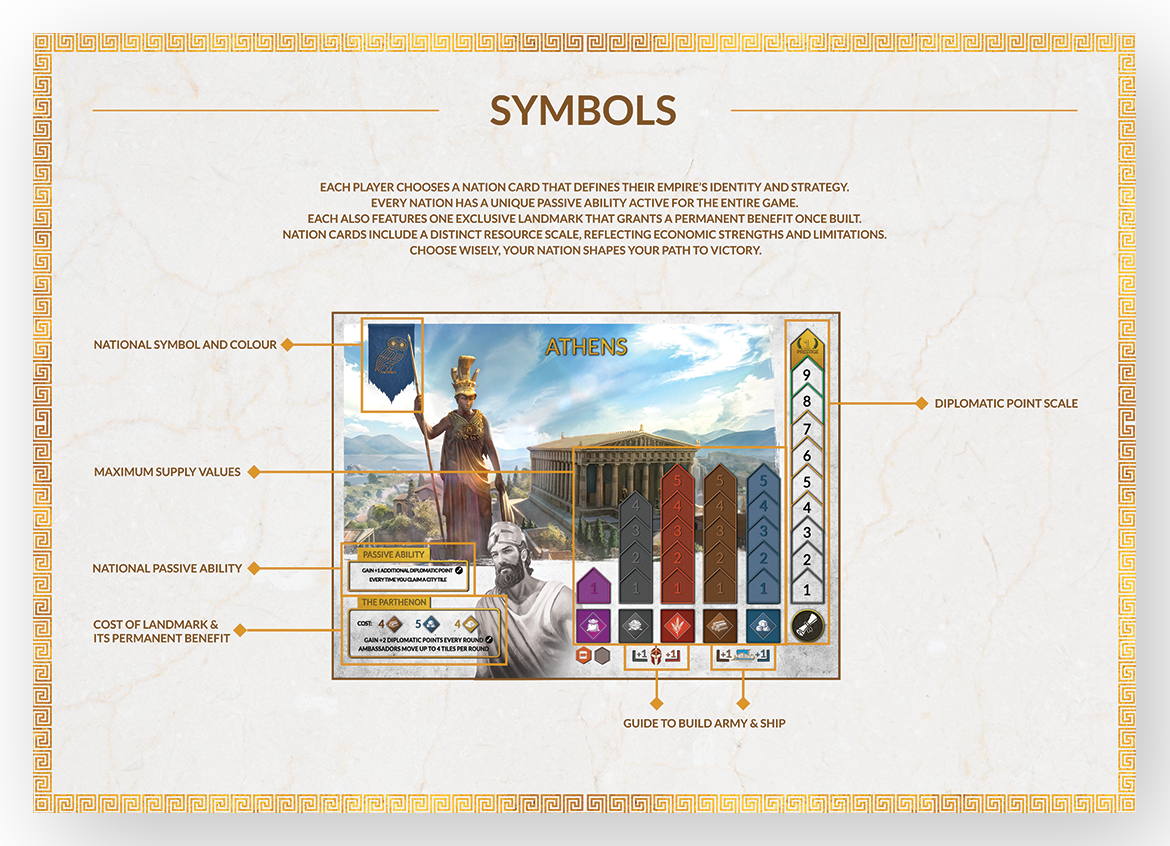
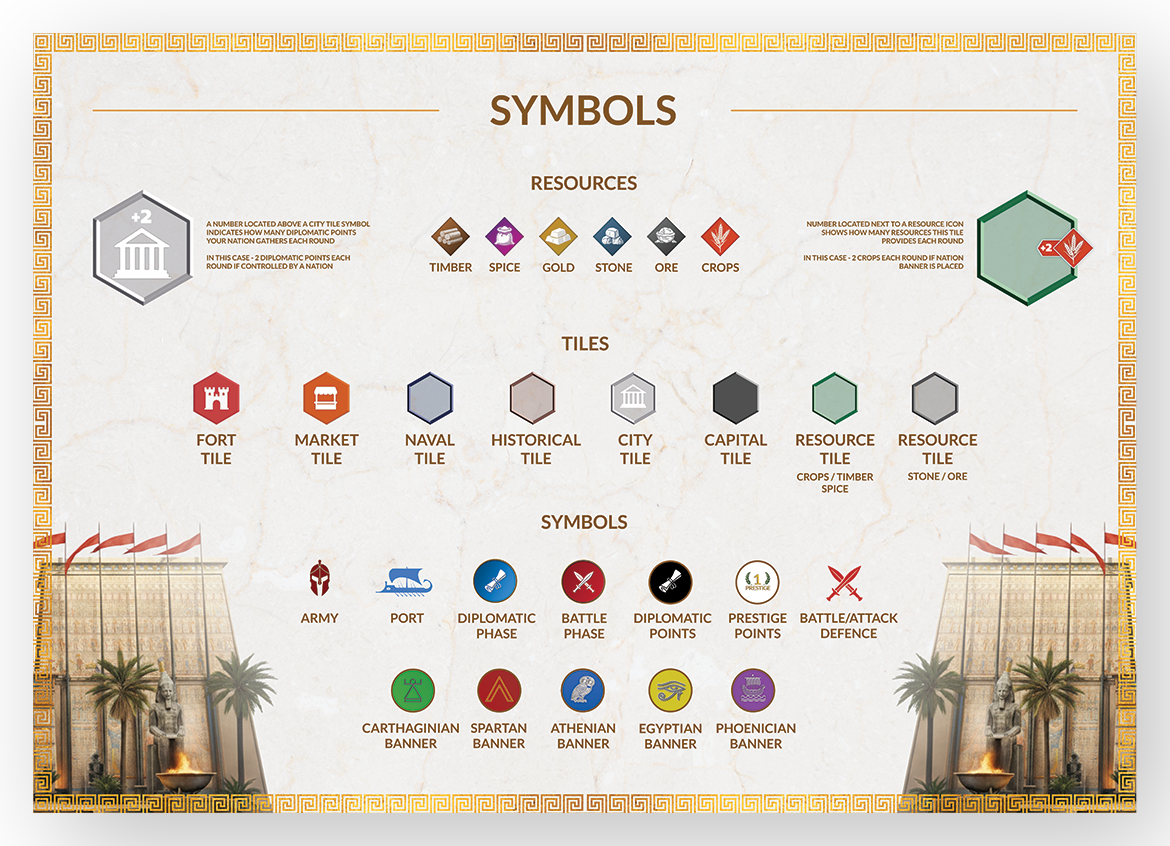
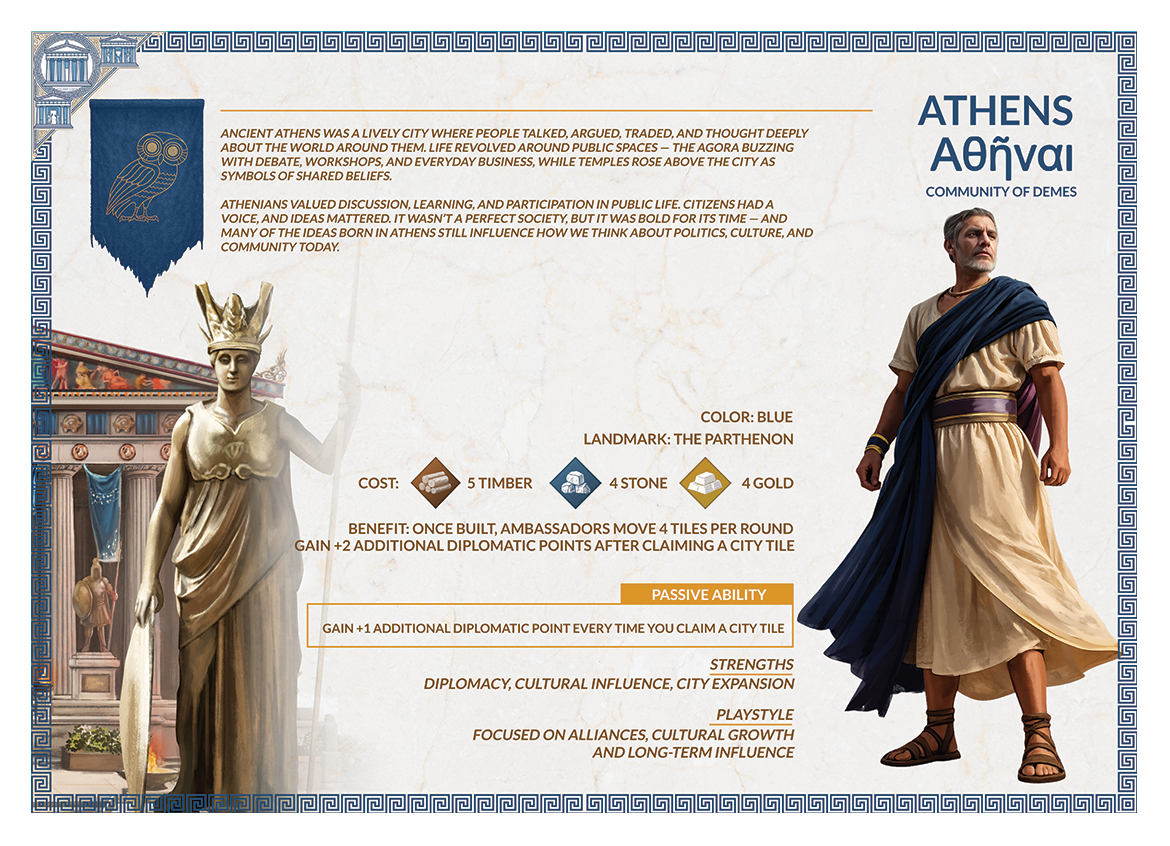
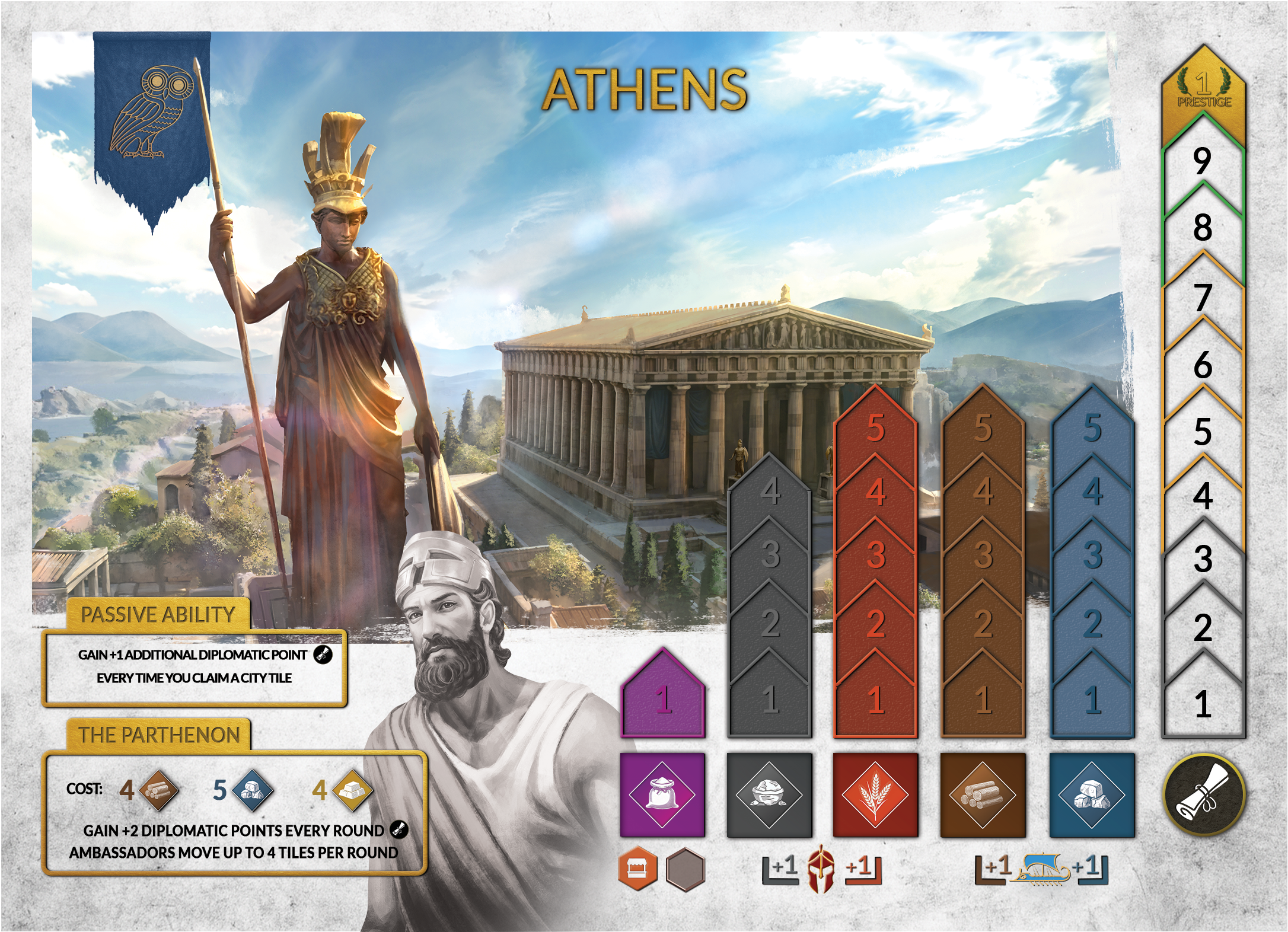
We have also been focusing on the final touches for the rules and organizing everything into the rulebook. This part is especially important to me, because I want Epochia to feel unique while still reflecting real references to the nations and the Bronze Age world. The colors we chose are inspired by the art of that time, while our artists are also adding modern elements to give the game a fresh and up to date style. Today, I want to share four pages from the book with you. They are still not final, so some changes may still happen, but I am excited to give you a closer look. Two of these pages are dedicated to symbols, their functions, and explanations, while the other two introduce the nations, their gameplay style, abilities, and special advantages, all decorated with their own themed frames, characters, and visual details.
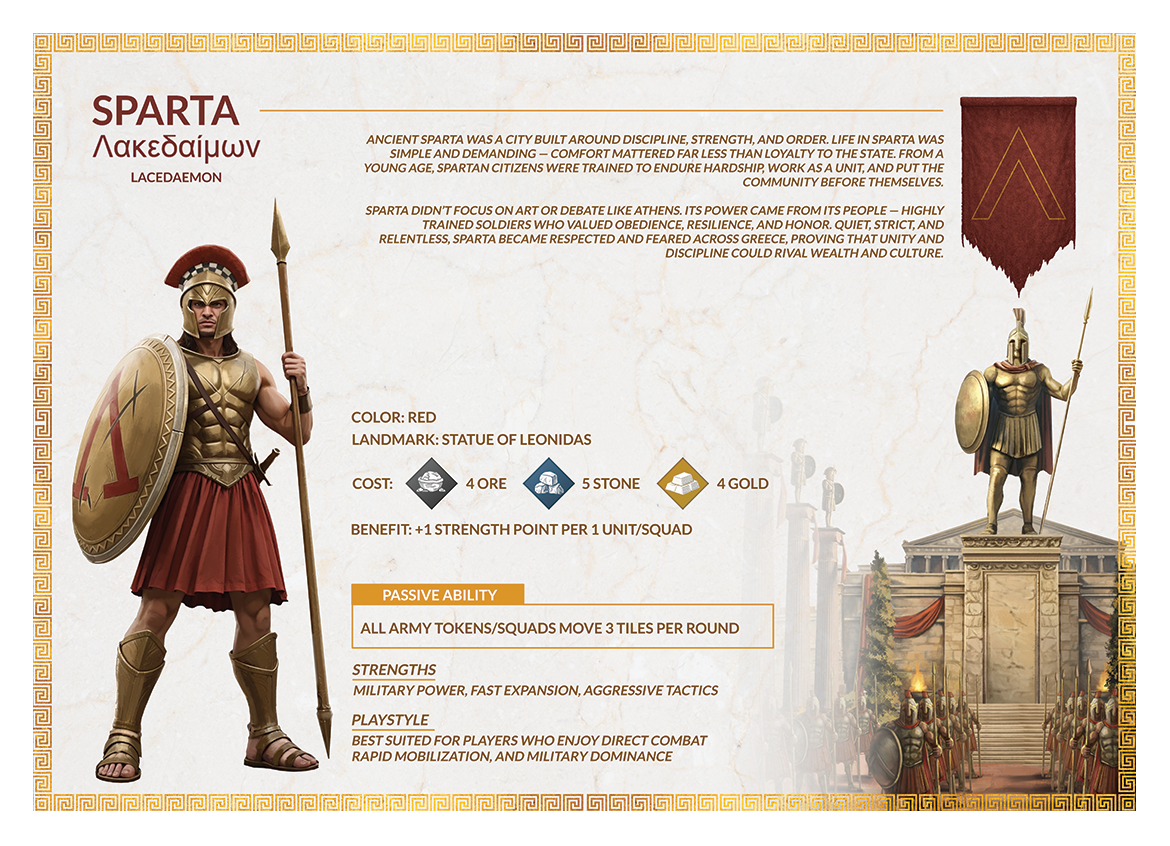
As an independent project, I am very happy with the progress we are making as we slowly wrap things up and move the game into a more presentable stage. I am doing my best to bring you the complete project in a way that truly shows its full potential.
talk to you soon,
OJ
Development Update_2: Visual Evolution
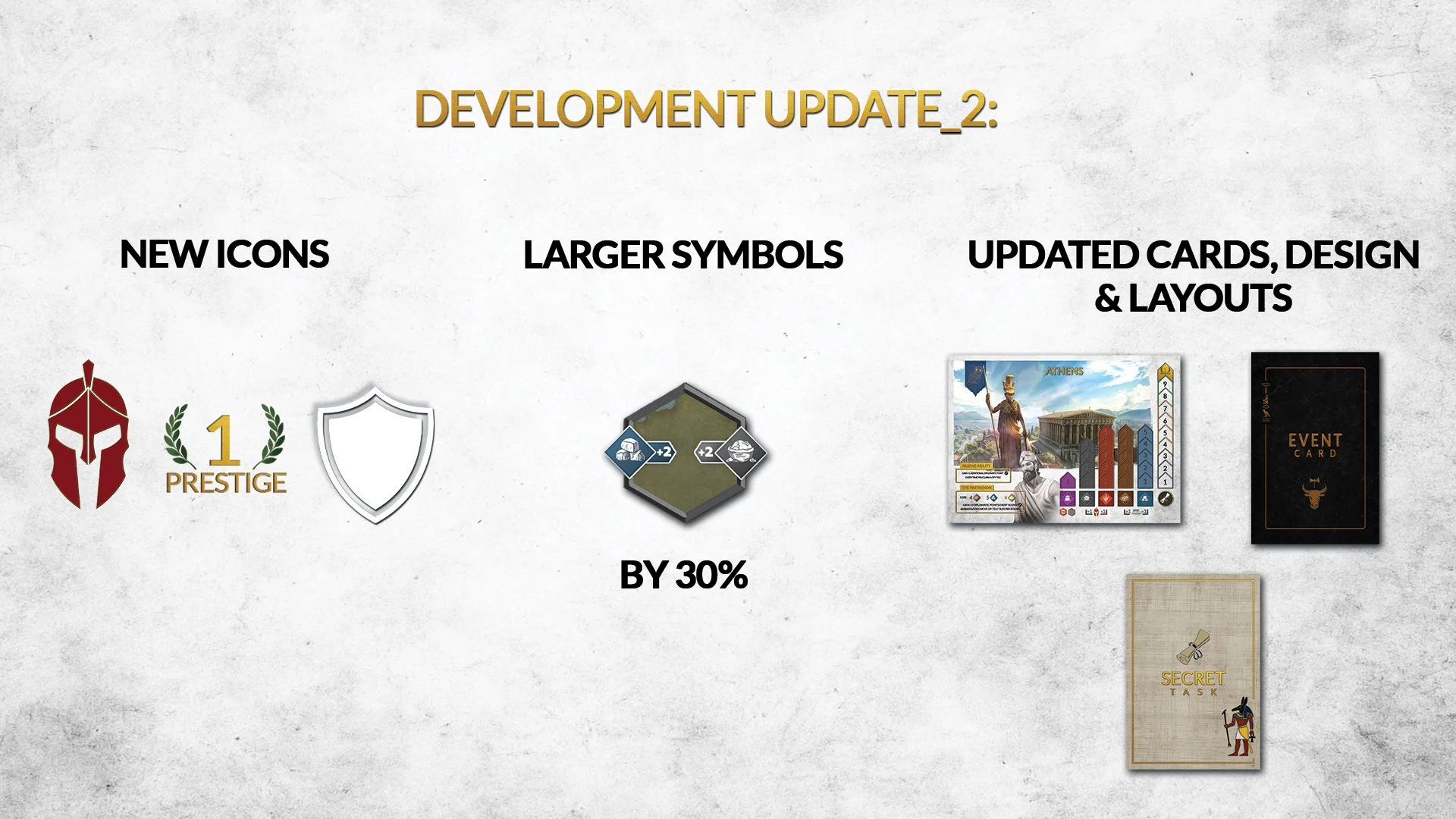
Hello everyone, it’s been a little while since the last update on the game. Between the holidays and other responsibilities, posting slowed down—but the work didn’t. The artists and I have continued refining and improving Epochia, and there are some significant changes compared to the previous prototype that was shown publicly.
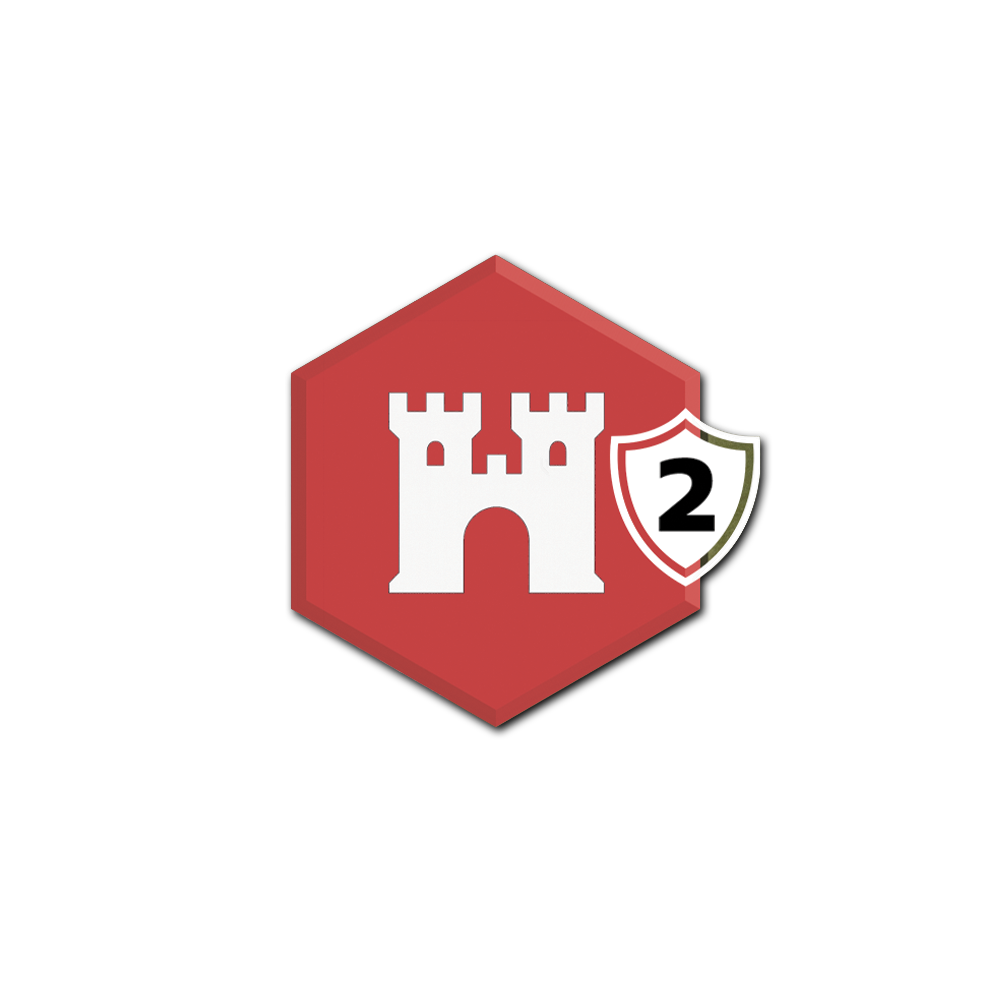
We’ve created an updated map featuring new icons for defense values on capital cities, historical sites, and fortresses. This means you no longer need to memorize numbers—everything important is now displayed directly on the map, making planning clearer, faster, and more intuitive.
We also introduced a new army icon, so play cards now clearly distinguish between attack, army, and defense symbols. This removes any ambiguity and ensures that every symbol communicates exactly what it’s meant to.
After some iteration, I’ve also redesigned the Prestige Point symbol. The new version is flat, minimal, and distinctive: a gold number one combined with the prestige emblem and a green olive branch. It stands out visually while still fitting naturally into the overall design language.

Map readability received another major improvement—we enlarged all symbols by 30%, giving players much clearer orientation at a glance. On top of that, we added several new naval tiles to expand sailing tactics and strategic options. One has been added near Carthage to give the nation more flexibility when launching naval missions, another in the north-western Peloponnese to open new landing opportunities, and a third in Anatolia. Sea routes are now more open—and more dangerous—giving players even more reason to watch the coasts carefully.
Nation cards have also been updated with additional icons, making it easier to quickly understand which resources are needed for building ships, recruiting armies, or managing spices.
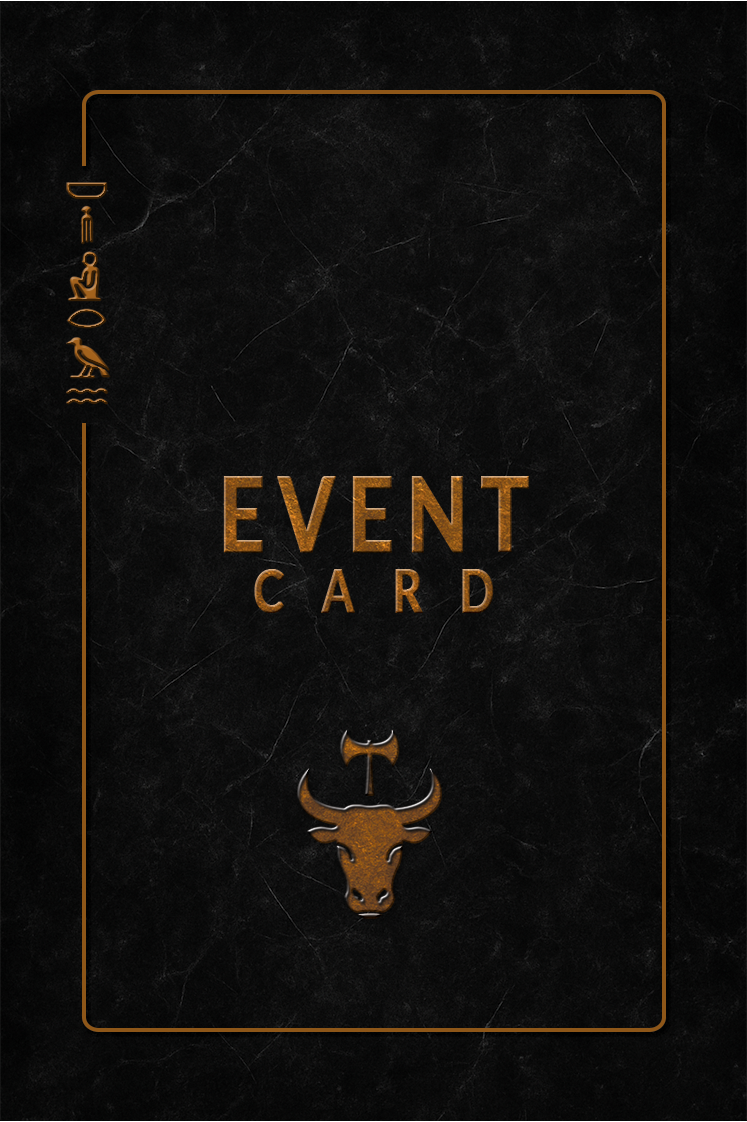
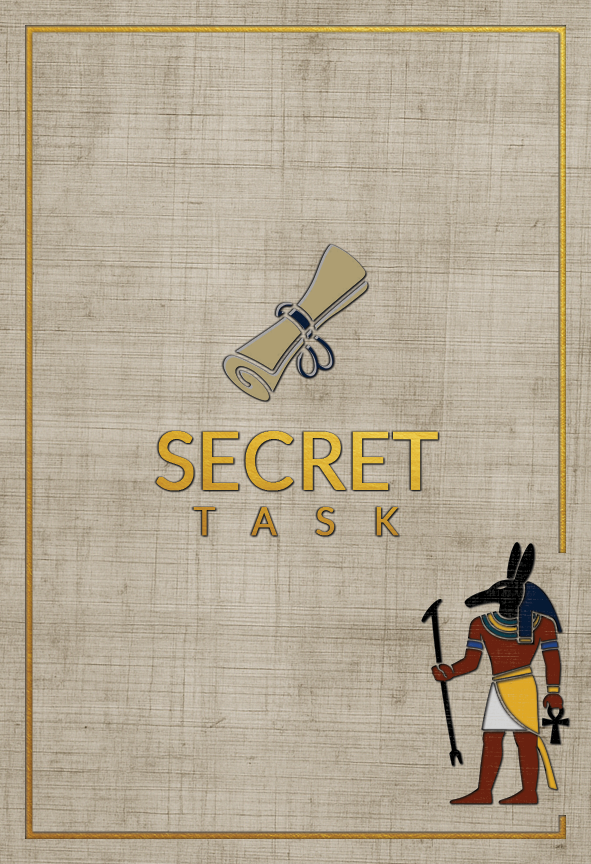
Event cards and Secret Task cards received redesigned backs as well. Event cards now combine black marble with a bronze Minoan symbol and hieroglyphs, while Secret Task cards feature a papyrus background with the Egyptian god Seth, symbolizing chaos and disorder—setting the tone for exactly the kind of surprises these cards bring.
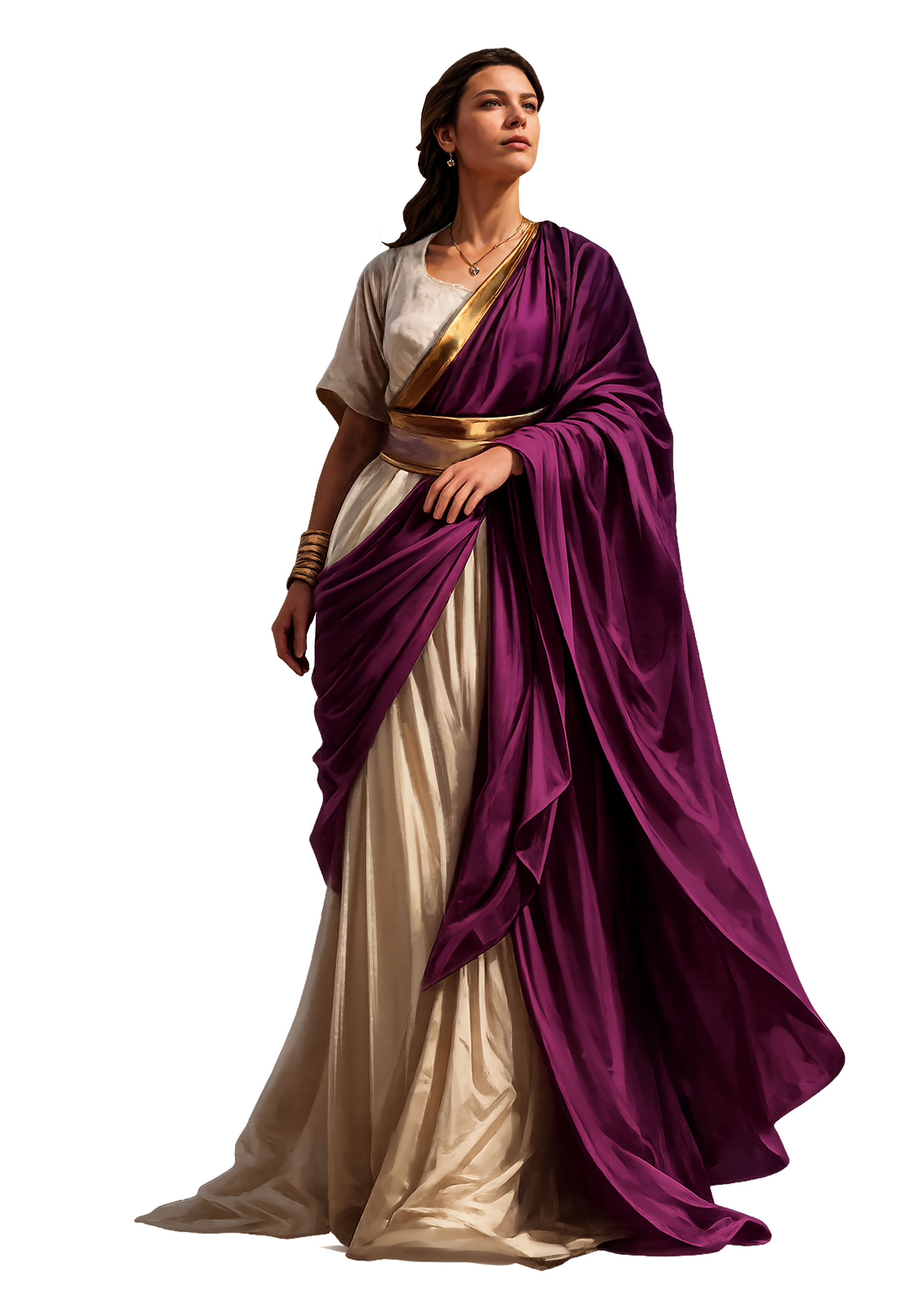
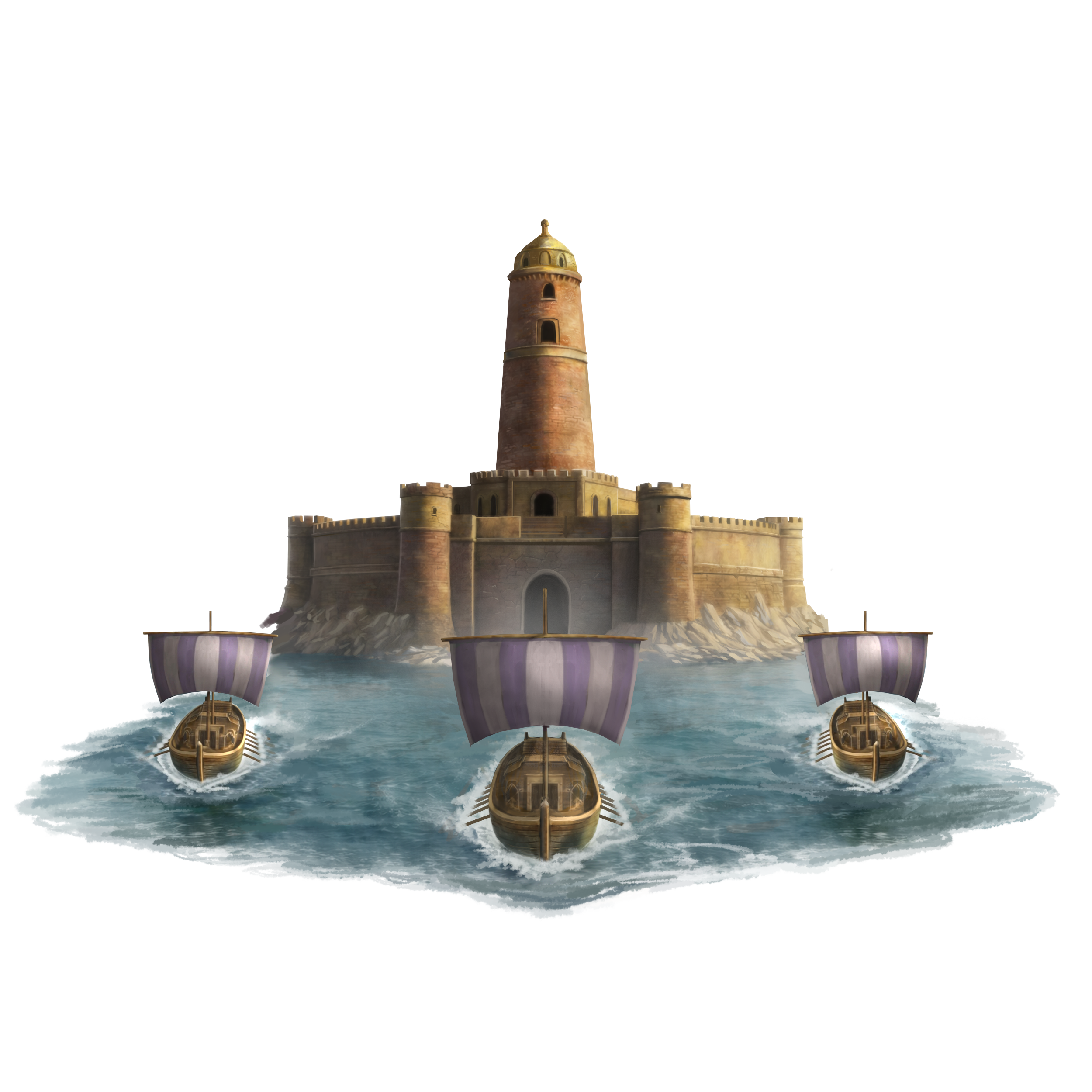
As a bonus, we’ve created new illustrations for each nation. I’ll tease one addition to the Phoenician family in particular: a magnificent lighthouse, merchant ships at sea, and Queen Elissa herself.
There are many other parts of the game still in progress, and we’re steadily moving from a solid foundation toward a fully polished experience.
More coming soon.
OJ